All posts by Andy Todd

No bikey, no lighty (Andrew)

The day the clocks go back is the worst day of the year if you work night shift. I worked night shift as a hospital porter in Stornoway. At 1am I would have to walk round the hospital and change all the clocks. By 1:20am it was 12:20am and I still had another seven hours and forty minutes of my shift to go because, while the clocks went back, the time my shift ended stayed the same. A nine hour shift became 10 hours. I wouldn’t have minded if I was paid for the extra hour but the hospital couldn’t distinguish one shift from another so, as far as they were concerned, I’d only worked 11pm to 8am even if I’d had an extra hour in the middle.

(Of course, when the clocks wend forward, a nine hour shift became an eight hour shift but there was no guarantee that you’d be working that shift to make up for the extra hour! It really was unfair!)

I mention this because it’s almost time for the clocks to go back; a time that also reminds me of another time: the time for the lights to go back too. It’s time to attach lights to my bike so that (a) I can see; and (b) more importantly, cars can see me as (a) I don’t want to get run over; and (b) I really, really don’t want to get run over.

Yet, even though not getting run over is definitely one of my top goals when out on my bike, I’m always reluctant to get the lights out. I know they’re safe, they help me see and be seen, but I can’t help thinking how much nicer my bike looks without lights.

(Don’t get me started on mudguards. They’re the bike equivalent of making Eva Green/Ryan Gosling/whoever floats your boat* wear a Donald Trump mask before going out on a date.)

I just don’t like lights. They’re like zits for bikes. You know there’s beauty underneath but why do they always have to be right in your face so you can’t avoid seeing them all day. Car lights are hidden. No one notices car lights. Yet we stick lights on the front of our bikes like we’re attaching a rocket launcher to a tank.

Then there’s the ‘modes’. It’s not enough that every light shines white with a strong unbroken beam. We also need them to pulse, to flicker, to swing left and right and to flash so strong and so fast the man in the moon will have an epileptic fit.

If you’re thinking of opening a nightclub don’t hire an expensive light system just hang a bike from the ceiling. That’s all you need.

So, with the clocks going back, I find myself putting the lights back on my bike too and I realise why we have the extra hour. It’s not for farmers, it’s not for early morning commuters, or school children wanting to avoid walking to school in the dark, it’s to give cyclists an extra hour to complain about how their bike doesn’t look as cool it used to.

*Except Donald Trump (but, if it is Donald Trump, then we hope you mean that he floats your boat in that he’s full of hot air and will quickly blow up your dinghy).

Welcome to my PAIN CAVE!!!! (Andrew)

Do you know what I love? Pain!

First thing in the morning, I just can’t wait to get me some of that old pain. At breakfast, I have pain with my cornflakes, pain with my toast, and, sometime, I even have pain with my yogurt – or youHURT as I call it.

At lunch, more pain. Go for a run. Bring my shorts, my shoes, bring my fruit based music device  but, most of all, bring the pain!

Then, when I go home, I like nothing better than putting my feet up with a nice relaxing mug of PAIN!

Pain, I love it.

Of course not. This is silly. No one likes pain. It’s, well, painful. And it hurts. And it’s sore. And do you know what I really, really love – not being in pain, that’s what I love.

Yet, as triathletes and cyclists you hear people calling their turbo set-ups their “Pain cave”.  Just going to “pain cave”, they’ll say. “Big session in the pain cave” last night.

(Twats)

I, on the other hand, don’t want to retreat to my pain cave, instead I want to give it a name that will make me want to go back on the Turbo again and again. That’s why I’d like to introduce you to my cuddle closet. It’s a small room, it has a computer, a desk, a bookcase, and a bike set up on a turbo. It’s where I go when I want to feel warm and happy like a cuddle. It’s my cuddle closet and it’s definitely not my pain cave.

If cuddle closet doesn’t suit you, other names are available. May I also suggest:

  • Fungeon aka fun dungeon;
  • The Ghetto Way For An Hour;
  • The Happy Place;
  • The Sweat Suite;
  • Or, if you really must bring the pain, the I’m Pushing Myself But This Is Just Mild Discomfort Cave.

Trossachs 10K (Andrew)

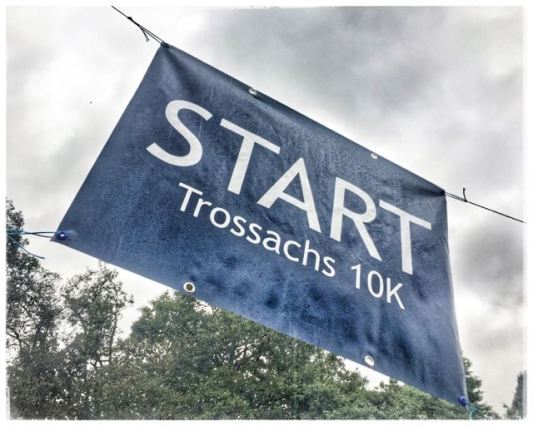
Processed with Snapseed.

Every race needs a starter. If you don’t have a starter then you don’t have a race, you just have a lot people in lyrca standing politely and looking at each other to see if anyone else is going to move first. That’s not a race, that’s a queue.

You need a starter. Someone to fire the pistol, sound the horn, drop the flag, or fire a smoke cannon and let off a hundred fireworks (Long Course Weekend, I’m looking at you and your extravagant start!).

The Trossachs 10K however did things a litle different. It was started by a local chef from the Forth Inn.

“Good luck,” he said, dressed in chef’s whites and still wearing his apron like he’d just wandered out of his kitchen, which he had, because the kitchen was only 20 metres from the start line.

“Why is the chef starting the race?” I asked Iain.

We couldn’t figure it out. He didn’t mention a running club, so we assume he wasn’t one of the organisers, he didn’t mention a charity, so he wasn’t one of the beneficiaries, and he didn’t plug his restaurant, so he wasn’t even looking for publicity.

We can only assume that there was a misunderstanding. Someone must have said they needed a starter and someone else thought they’d best get a chef because, if there’s one thing chefs know, then it’s starters…

It’s apt that the race was started by a chef as the only reason we were racing the Trossachs 10K was that there was a cracking butchers in town and we fancied a run then lunch from the butchers (sausage roll and a macaroni pie for me, delicious).

The race itself is run through the Queen Elizabeth forest and is mostly on trail paths. It’s a great route with some ups and downs through the forest. It was raining but not too heavily to make it uncomfortable to be out running.

I ran round with Iain, we weren’t competing against each other or looking for a time, but, at the end, I felt comfortable and sprinted the final few hundred metres. Sadly, the chef wasn’t at the finish, but, you know, no one finishes with a starter.

untitled


Triathlon’s biggest challenge(Andrew)

You can’t believe you’ve got to do this. It’s too much. You’ve been putting it off for ages but you know it’s time. You need to do this. Now.

But you hesitate. You don’t know if you can do this. Even the thought of it makes you wish you could just sit in your favourite chair with your feet up and the telly on. Instead you’ve got to prepare. There’s shoes, socks, cycling shorts, tops, both cycling and running, various towels, some used, some not, a wet suit, and gels. It’s too much. Why couldn’t you do something simpler instead? Something that didn’t involve more items than an Argos catalogue.

You’ve got no choice though. You’ve already signed up. You set this challenge and now you need to face it. The hardest point of all. Not the swim. Not the cycle. Not the run. Not the many, many hours battling the elements, your body, your mind. This is worse. This is the moment you always dread. The point when you just want to give up and never do another race again.

This is reaching into your bag once you get home and sorting out your kit for washing…

This is the real challenge of triathlon….

“Why is my wetsuit covered in reeds? We were in a swimming pool?!?!?”

“Ugh…. this sock is… solid???!?!?!?”

“Don’t open the bag of half eaten bananas! No!!!!! Aaargggh! The smell! We’re all going to die!!!!!!”

Lost in London (Andrew)

It’s very rare that runners now get lost. We have smart phones and GPS watches. We always know where we are because we need to know where we’ve been to upload to Garmin, Strava and the world at large. It’s easy to forget that only a few years ago going for a run sometimes meant memorizing a map or route before you’d left the house.

Want to go on a five mile run somewhere new? Then stare intently at this map until you are absolutely sure how many left and right turns you need to take to end up back at the house and not in the middle of nowhere.

Last week, I went for a run round London. I thought I knew where I was going. I wanted to run to the Thames from Shoreditch then along to Westminster and back. In my head it would be around four miles. A nice 30 -35 minute run in warm sunshine and a cool breeze.

One hour and 10 minutes later I eventually got back to my hotel. I’d run nearly eight miles. What had gone wrong?

First, London streets are not in straight lines. That might seem an obvious statement but, when running round the City, it’s easy to turn left to look at a big tower like the Gherkin or the Walkie Talkie, only to turn left again and find out you’re actually running away from where you think you’re going. Roads double back. Buildings are deceptive. It’s like The Maze Runner but without the rubbish CGI spider monsters chasing you with a pneumatic saw/arm.

Secondly, London is much further apart than I’d remembered. This should also not have come as a shock. London is big. I forgot that. I used to live there. I should have known better…

Thirdly, and this was the main problem, I wasn’t carrying a map. I’d forgotten to bring my headphones with me so I didn’t bother taking my phone as I wasn’t going to be listening to anything. Instead, I had to navigate by bus signs. Every bus stop in London has a small map of the surround area, so, every five minutes, I’d stop check the map, work out if I knew the rough direction that would take me closer to Shoreditch then ran in that direction until I found another bus stop. Repeat until I finally found a street I recognised.

That’s why a four mile run became an eight mile exercise in urban orienteering. D’oh!

Getting back on the bike

They say if you fall off your bike the best thing to do is to get back on it – unless that is you’re missing a leg then the best thing to do is to call an ambulance and learn how to hop.

For me, two weeks after Norseman is the right time to get back on my bike. Nothing too strenuous, just 30 minutes on the turbo yesterday, just enough to send a signal to my brain that it’s time to start getting the legs moving again.

In this new spirit of athleticism, enthusiasm and lack of pain spasms after cycling last night, I decided to enter a few races this year. A 10k in September and a half marathon in November. Again, just a signal to my brain not to get too lazy in the next few months. But, equally, nothing too difficult as my brain is sending an emergency signal back to call for help.

The half marathon’s in Fort William in November and I’ve run it a number of times before. It has a new route this year but it still promises to be absolutely flat with the only hill being a step back onto the kerb when the pavement drops away.

But that’s not all.

I also entered the Deva Triathlon 2017 yesterday. I’ve filed this one in that part of my brain which says “File Here To Not Think About Until Next Year” and cross filed it with “Special Offer – £5 Off For Early Bird Registrations”. My brain might not be thinking multi-sports, my body might be thinking retirement, but my bank account is still thinking “Bargain!”.

Norseman Bike (Andrew)

bike

“Enjoy it”.

The bike leg of Norseman is 112 miles inland from the pier at Eidfjord to the town of Austbygde. It starts with a 1,250m climb to Dyranut, a long stretch along a high plateau, descends back down before the second half hits you with four increasingly longer and harder hills before a 15 mile descent to T2.

The weather forecast all week had been for a north westerly tailwind and for conditions to be mostly dry. That changed on Friday night. It was going to rain for most of the morning and afternoon. I’d brought waterproof cycling shorts, shoes and jacket with me so wore those straight from transition, even though it was dry when I changed. I thought it would be enough, I was wrong.

The bike leg start with a few miles along a flat road from Eidfjord before the climbing starts. The cliff face rises on either side, we follow the old road around the edge of the rock face, dart through tunnels lit by candles, and it feels like we’ve travelled back in time. We’ve left the modern world behind. The road is pitted, but potholes easy to avoid, the drops are steep and tumble down like the waterfalls that scour the sides. I settle into an easy rhythm in my lowest gear and largely keep pace with the rides around me. Occasionally, I even overtake riders on TT bikes standing on the pedals, while I sit down and pass them on the left.

The views are stunning. Wisps of clouds hug the tops of cliff like triumphant climbers about to summit, looking down I can see glimpses of other riders, brightly coloured ants against the dark grey cliff roads, and I keep repeating in my head:

“Enjoy this.”

Because what else is there to do? If I cannot look round and feel that this is the only place I want to be today, that these sights are glimpses of landscape that I’m privileged to see and to be part of.

“Enjoy this.”

The climb consists of two distinct sections. The first strikes through the mountain, climbing through a cleft in the rock like the remants of a giant’s axe strike, the second is a longer climb towards the summit, through moorland and patches of snow along the sides of the road. It’s in the second section that it starts to rain. And rain.

I don’t mind the rain at first. I’m prepared, I have my waterproofs and I’ve used them before in bad conditions so know they’ll be okay. But then the clouds lower. Visibility drops and now it’s not only raining I can only see 50 – 100 metres at a time. This is why we wear a high-viz vest and use lights for the full route. I’m grateful for them. Not for me, but to see others, that I’m not alone.

The next few hours are an increasing struggle. The climb goes further than the profile suggests. Long shallow climbs where, even with a tailwind, progress is slower that I’d hoped. TT bike shoot by. I can’t keep up, nor do I try. I went for a climbing bike and comfort, not speed.

Spots that I remembered from driving across the plateau are rendered indistinct by the clouds. A lake with two black houses on the shore. Three turf houses at the side of the road. It’s always too late when I spot them. But still I tell myself to smile. I’m happy. But wet.

IMG_1044

The support car can’t join you on the climb, I see them in a traffic jam going down the mountain as I climbed up, the single road meaning there’s no place to stop. I’ve brought enough food for two and half hours, eating every thirty minutes. My standard ‘meals’ of ZipVit uncoated orange bars and banana gels. But after two and half hours I’ve yet to see Iain.

I thought I saw him at one point. A black Hyundai estate with 91 – my number – on a sticker on the back. He was down a short lane and trying to reverse the car. I’d shot passed him before I could stop. I thought if it was him, that he was reversing because he’d seen me and was going to follow. I was wrong.

It was another hour before I saw him. Every time a car passed I would hope it was him. After 30 minutes I started to worry. I wondered if he’d had a puncture or, worse, an accident. Every black car that passed was met with a searching look of its back window. 201. 15. 134. Not 91.

I was relieved when I finally saw him. I was soaked through and had run out of food. He pulled in a couple of hundred metres ahead of me. “I’ve got you pancakes,” he said.

By this point, I’d been thinking of quitting. I was starting to shake with hypothermia. I was losing the feeling in my hands. The rain was bouncing off the road and I wasn’t sure if I could carry on for another five hours like this.

“Put this on,” Iain said as I stripped off my hi-viz jersey, waterproof jacket and cycling jersey while sheltering under the open boot of the car.

He gave me a new base layer, my thicker cycling jersey (a Castelli Gabba), a fleece, a Goretex jacket and full length waterproof trousers. I thought he wanted to keep warm while we’d stopped. I didn’t realise that I was going to wear this for the next 60 miles.

“I’ll go to the next town,” I said. The warm clothes having done their job in persuading me to carry on.

“Just keep this on,” Iain said. And I did. I got back on my bike and pedelled off wearing more gear than I would I was climbing a mountain.

But it worked. I warmed up. I stopped shaking. The weather was still awful but as I descended in Greillo it became warmer as I left the plateau.

In town I met Iain again. “I’ll get to the end,” I said while thinking “Enjoy this, you won’t be doing it again.”

The second half of the course is a lot different to the first. It’s feels more part of civilisation, you can see towns, wider roads, and more road signs for evidence of other people.

There are four climbs in this section, nothing too tough or too long but each steady. The final climb is the longest, taking you up to and across a damn. It’s here that a Norwegian woman stands on the porch of a remote house and shouts “Well done, Andrew, keep going!”It takes me a few minutes to work out she must be following Norseman on the website. It’s also here where the support of other teams becomes invaluable. I’m going the same pace as a few other riders so I not only pass Iain every 40 minutes or so I’m also passing other support crews who also shout encouragement.

By now I’ve decided I’ll finish at T2. My temperature is screwy, I’m not sure of whether I should be running after hypothermia and the final climb up Zombie Hill is looking increasingly beyond me. I make the decision to be sensible and  finish while I have Iain as support and not to keep going when I’ll be running for at least 13 miles without support as Iain cannot park on the first half of the course (though it looked like many do!).

The final descent for 15 miles, through thick forest, small villages of colourful chalet houses, and, even better, it’s also the first time it’s dry. The sun peeks out, though not for long, and I’m hitting 35 miles an hour on the sharp descent and 25 mph on the flats. It’s too fast, too late though. I’m still dressed like Ranulph Fiennes.

At T2 I tell the timekeeper that I’m done. There is not a single doubt in my head that I’m doing the right thing. (Though a week later as I write this I think “maybe, just maybe I should have gone on” – but I know that’s a daft thought, I wouldn’t have finished).

After 112 miles, my legs feel okay, I still feel strong(ish) but the desire to keep going has been been washed out by the cold and the rain. The thought of running thought that again is more than I take. I’m done. But I loved it. Every cold, wet, miserable minute of it.

IMG_2770

Norseman Swim (Andrew)

13913732_10153645917416196_5488038405220482238_o

The dark water grips like a giant’s hand. I kick upwards and grin. I’ve made it. I’ve escaped. I’ve jumped from the ferry.

Earlier, it’s 3am and we’ve been up for 10 minutes. My back feels fine. The physio’s promise has come true. It was okay for Saturday, she made no promises for the rest of the week. I pull my wetsuit on over my legs but don’t pull it on over my arms. Instead I wear a couple of t-shirts. It would be too warm to walk around in a full wetsuit.

I grab my bag for the boat and we drive five minutes to Eidfjord and park behind the main street. We walk down to the pier and… we’re lost. We’ve walked the wrong way and we’re facing a school building. Good start, especially in a town that only has a handful of streets, most of them pointing down to the shore.

We walk back and take the right street.

At transition we have another scare. They check the bike for lights and for working brakes. They check my bag to make sure I have a hi-viz top for the first 20 miles but they say mine doesn’t have enough fluorescent stripes. “It’s doesn’t?” I say dumbly, thinking, “Is this it?” But they have spares and I get a baggy extra large Norseman hi-viz top instead. It doesn’t fit. It doesn’t matter.

We take the bike and bag and I join the queue to board the ferry. We need to be on board by 4am and, through the windows, I can see the Olympic opening ceremony playing on a tv in a lounge. I remember that it’s not quite morning, that it’s still Friday night no matter what time my watch shows.

The deck of the boat is empty as everyone finds a seat in the lounges upstair. I sit beside a Canadian and a Swedish man who has the same type of wetsuit as me. “You must have had the shortest journey?” I say to him to make conversation. “I drove for 14 hours,” he said. D’oh.

At 4:45 I apply Powerglide and ask the Canadian to zip up my wetsuit. I wish both of them luck and I go down to the car deck, which is not filling up with athletes getting ready for the race to start.

At the back of the deck I see the hose pumping and spraying sea water. I know I need to adjust to the cold water so I walk straight into it  –

– and start hypeventilating –

– so I duck out of the spray, then duck in again.

And again. Again. For 10 minutes. Until the water no longer feels cold, until I can breathe normally, until I feel ready to jump.

13925442_10153645915211196_6084655913261949439_o

A tannoy annouces the jump will start in two minutes. I put on my large swim cap to cover my ears, my goggle and my race cap. I walk as close to the front as I can. I don’t want to wait. I want to go straight in without hesitation.

The jump starts.

People fall like lemmings in front of me. It only takes a few seconds for me to stand on the edge of the deck. Another second for me to jump. To raise my hand to my google to make sure they stay in place. Then I strike the water and it’s cold, and dark, and surrounding me completely holding me tight in it’s grip, but it’s not too cold. And as I kick to push myself up and break the surface I see lights on the coastal road, dawnlight peaking over the fjord and I grin. And I shout in joy. I’d faced my fear and I’d won.

There is line of canoes ahead of me. I swim over, using breaststroke and a few crawl strokes to acclimatize more to the water.

I look back and people are still falling. The boat squats on the water and I know that everything will be okay.

I float for a few minutes. “Enjoy this,” I tell myself. Dark cliffs tower above, in front and to the side. The water is cool. And fresh, the winter snows creating a freshwater layer that masks the salt. The canoes drift. I stay near the front, floating between two canoes. I know everyone will pass me but I like the thought of being in the lead if only for a second.

I wait for the ferry’s horn to sound.

RRRRRRRRRRRRRRRRRRRWWWWWWWWWWWWWWWWWWWWWUUUUUURRRRPPPP

And we’re off. I’m quickly overtaken but I settle into a rhythm. 1 – 2 – 3 – 4. 1 – 2 – 3 – 4. And I breathe to my left every time I count 4.

I have no idea where I am. I can see lights in the fjord ahead. Daylight wakens and I know which direction to go but I can’t tell how far I’ve gone or how far I have to go.

Even when we turn the corner of the fjord and face Eidfjord directly I don’t know if this is one mile or one metre away.

At times I follow the feet of a swimmer in front. At others I have a Siamese twin. A swimmer breathing to my right keep pace and only a feet away to my left. Some times I even swim near a pack, though most of the time I’m on my own. I’m further out than others but as I’m heading in the right direction I don’t try and move closer.

In Eidfjord they light a bonfire on a beach to help you find your way. I didn’t know this when I swam but I could see an orange light and I used that to get me to the first (and only) bouy. From there it’s about 500 metres across Eidfyord pier to a small rocky beach. This final stretch is tough. It was the same area we’d swum yesterday in a practice session. Yesterday, however, it was flat calm. Today, the wind had picked up waves and the current was against me. But I was nearly ‘home’. I kept going.

Round the pier I thought there was another 100 metres to the finish but I was wrong, it was only 20 metres. I kicked my legs to try and get some feeling into them. I wobbled on the stoney ground when I stood up. I tried to balance and looked at the people on the beach and the pier above to see if I could find Iain.

I started to jog. (As if it would help!). I was happy, I was done. I told myself: “You will never do this again!”, the same thing I told myself last year at IronMan UK. I’m good at lying to myself.

13987385_10153645913071196_5314804899051167661_o

Norseman – Part 1 (Pre-race) (Andrew)

Pride comes before the fall, which is okay, at least it’s better to have pride before you fall than a really, really big cliff.

I had pride on Saturday, a week before Norseman. I went for a short BRIC session and felt strong. “Looking good,” I thought, “you’ve reached the start of Norseman and you feel strong and confident and every bit of your body feels like it’s in tip top condition. Well done you!”

On Sunday, I climbed a ladder to the attic and tried to pull my bike bag down. When I tugged it I could feel a sharp twist in my lower back. Luckily, I didn’t fall, or at least not physically. Mentally, I knew what had happened. Pride. And a recurrence of a back injury from November last year. The same injury I had when I was told I’d got my spot in Norseman. I could only hope it would heal in time for the start.

They say time is a great healer but do you know what’s an even better healer? A fully trained physio. On Tuesday I was prodded, poked, stretched and manipulated back into shape. “You’ll be okay for Saturday,” she said. But she didn’t mention Wednesday, Thursday or Friday, days where the pain only increased rather than lessened. “Will I even make it to the start?” I thought.

It was only on Friday afternoon that the pain – by now just an intermittent dull ache – started to ease. I knew this would happen. That physio treatment tends to make things worse for 48 hours until you get better but it was a horrible couple of days of doubts and questions.

Alongside my doubts I was also having bad thoughts about the jump into the fjord. “People die when they jump into cold water,” I thought, “you’re going to die!”. I knew these fears were baseless. I’ve jumped into cold water before but I couldn’t help circling back and forth like a vulture around this dark thought.

This meant I wasn’t the best of company for the days before Norseman. No confidence. Full of fear. Such a change from Saturday.

As I tried to sleep on Friday night the thoughts were still there. Should I quit? Should I start? Should I just walk away? I went to bed at 9:30pm but it was a long time before I slept.