The Sound of Football: Alloa Athletic (Andrew)

Every fortnight we cover the best and worst football songs from every club in the UK from our book ‘The Sound Of Football: Every Club, Every Song’. You can buy it here

Alloa Athletic

Nickname: The Wasps

Ground: Recreation Park

Stadium Capacity: 3,100

Song: The Boys In Black & Gold by The Utopians

Just like Albion Rovers, Alloa has used The A-Team theme song when walking onto the pitch – though we think it has missed a trick by not renaming it – just like the French, who renamed The A-Team as the All Risks Agency (L’agence Tous Risque). However, the French didn’t stop there. They also added new lyrics to the music and turned it into a full-blown soft rock song. A-Team leader Colonel ‘Hannibal’ Smith may have loved it “when a plan comes together,” but when the plan involves an iconic 80s TV show and a cheap rip-off Charles Aznavour singing, even he will baulk at the result. So, maybe Alloa is right to just call on the A-Team even if we all know that they should have renamed the song as the AA-Team. 

Our favourite song for Alloa’s is ‘The Boys In Black & Gold’ (the team colours) by The Utopians. The band was founded in Leicester in 2007 by frontman Jason Westall and guitarist James Shaw. They didn’t last long, and their Facebook page consists of only a handful of entries. The second last one from 2010 promises “that work has begun on a record which is arguably ‘more important than the New Testament,'” which shows while they may have lacked success, they didn’t lack ambition.

The band toured in January 2008 to support the release of its debut single ‘There’s a Train,’ which gained good reviews and Radio One airplay. ‘The Boys In Black & Gold’ was released as a B-side, and the band was invited to Recreation Park. The club’s website confirms that the song was played before kick-off, halftime, and after the final whistle.

It’s appropriate that the song was a B-Side as, while many clubs are known as perennial runners-up, Alloa Athletic has made a career out of coming second. It holds the record for finishing runners-up in the third tier of Scottish football a record eight times, most recently in 2012/2013 when Alloa clinched promotion to the First Division via a play-off.

Many clubs hate playing Alloa Athletic, not because of a fearsome reputation, but rather because its pitch is artificial turf. However, this had one benefit – in 2010, Alloa was the only club in the country to play football after a cold snap meant every other Scottish game was postponed due to freezing weather conditions.

One of its greatest players was Willie Crilley, affectionately known as “wee Willie Crilley,” “Electric Spark,” and also “The Mighty Atom,” a free scoring striker who played for Alloa in the 1920s and was considered to be one of the best strikers in the league. He still holds the record for the most goals scored by an Alloa player in a single season.

Willie’s nickname was not ironic. At best, he measured 5 foot 3 inches, but some records say he was smaller. He was so small that even the club’s official history recounts an apocryphal story that during one game, he ran with the ball between an opponents’ legs before scoring. He subsequently joined Celtic, but his heart was with Alloa, and he only lasted a few months before returning.

Injury meant his career was, ahem, cut short, and he emigrated to the United States to start a new life. He played for several US clubs but, after marrying a US girl and taking American citizenship, a dream return to Alloa was foiled by immigration. In 1929, Willie had returned to Scotland to re-joining Alloa, but as he was a US citizen, he was deported back to America before playing for the club.

In 1934 he returned to Scotland for a final time to try and re-join his beloved Alloa but time and injuries meant he was not the player he once was, and the club’s directors turned down his offer to play.

If Willie had played today every time, he scored he would have heard ‘Live is Life’, the 1985 hit by Austrian pop group Opus. 

‘Live is Life,’ often misconstrued as ‘Life is Life,’ was recorded live at Opus’s 11th-anniversary gig at Oberwart Stadium in Austria. This live version of the tune immediately shot to number one in the Austrian charts, and as 1985 dawned, the hit went global. While Opus is often considered one-hit wonders, they’d started in 1973, and, in Austria, they continued to release hits, including a tune for the Austrian national team for the 1998 World Cup. ‘Viva Austria’ sold thirty thousand copies, although sadly, the Austrian team didn’t fare quite so well after being knocked out in the first round.

‘Live Is Life’ has been adopted by several sports as an anthem, particularly in Europe, and in 1994 Opus released a new version for the World Cup that year, held in Willie’s adopted homeland, the United States.

Buy the Sound of Football from Amazon.
Film Friday – The Dawn Wall(Iain)

Film Friday is a weekly recommendation of one video to watch this weekend.

The story of one man’s obsession to be the first to climb a seemingly impossible 3,000 foot rock face in Yosemite National Park, California.

A Netflix film about much more than just climbing. Give it a shot even if you would normally avoid this type of film.

Sir Chris Hoy Velodrome (Andrew)

Does Sir Chris Hoy have to pay to work out in the Sir Chris Hoy Velodrome? Does Olympic swimming champion Adam Peaty have to find 20p for a locker when he pops into Uttoxeter Leisure Centre’s Adam Peaty Swimming Pool? Because otherwise what’s the point of having a sport centre named after you if you can’t get in for free?

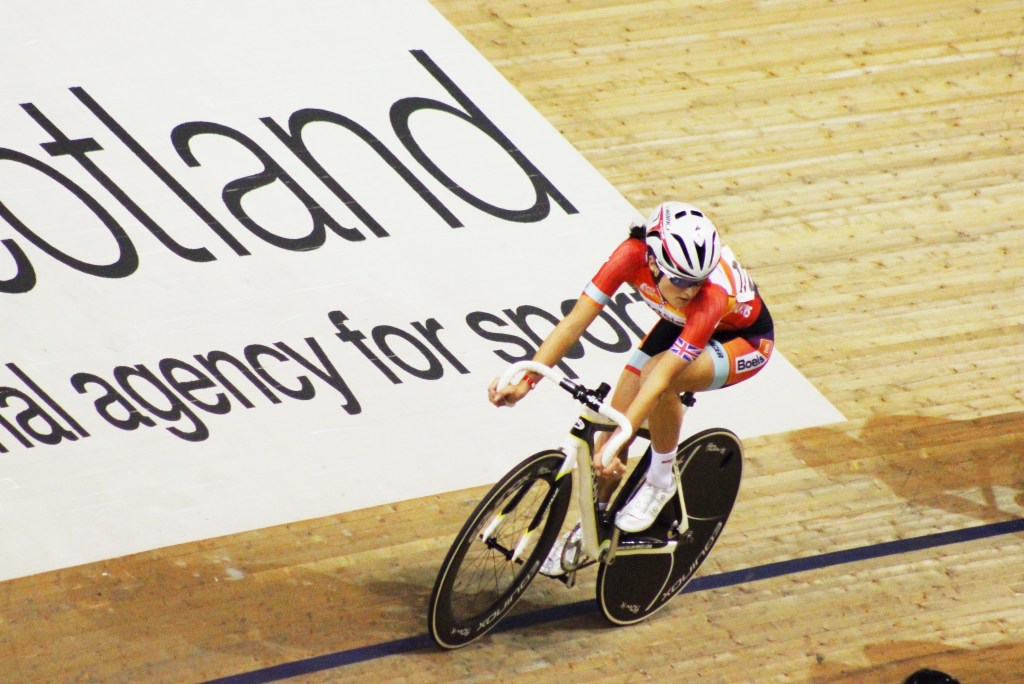
Whether Sir Chris has to pay or not, he might first ask himself if he really wants to ride the cycling track in the velodrome? I assume after five gold medals and 15 year career racing in velodromes that the answer will probably be “yes, I, Sir Chris Hoy, gold medal winning track cyclist and one of Britain’s greatest Olympians will ride the track!” but, as he now spends more time racing cars, maybe he’s scunnered and doesn’t want to go anywhere near a 45 degree sloping wall?

I know how he feels.

The fear of a 45 degree sloping wall, not the whole being one of the greatest athletes in the world.

I thought it would be great to learn how to ride in the velodrome. It would give an opportunity to ride indoors during winter months and to learn a new skill: dangerous balancing. See also tight rope walking for more examples of dangerous balancing.

In order to start at the velodrome I had to complete four induction courses. You can find more details of them here: Velodrome

However I quickly realised that I didn’t have what it takes to ride in a circle again and again and again.

It wasn’t the steep walls. After the first couple of circuits it felt natural to ride the steep banks. It wasn’t other riders, though having seen one accident – Iain TwinBikeRun describe it here Welcome to the Velodrome (Iain) – I wasn’t keen to see another. It was actually a single thought that stopped me going back. That thought was this: “What if I get a puncture?”

You can’t ride a bike without getting a puncture. It’s as much a part of riding as wobbling and pretending to fall off is a part of tight rope walking.

And there’s nothing you could do if you get a puncture while riding 10 foot up a track.

Now you could say that all life is a risk and that at any moment a bolt of lightning could shatter a peaceful blue sky and strike you dead, which is true. Life is filled with randomness. But that doesn’t mean I need to be standing in the middle of a field waving a long metal stick while shouting “Everyone knows the Good Lord smells!”

Which, in my mind, is the same thing as riding a bike on a velodrome track waiting for the inevitable puncture.

It wasn’t for me.

Maybe it’s for you.

The induction is well run, felt safe and was fun. I’d definitely recommend trying it – but it just wasn’t for me.

Film Friday – Roaming In The Wild (Iain)

Film Friday is a weekly recommendation of one video to watch this weekend.

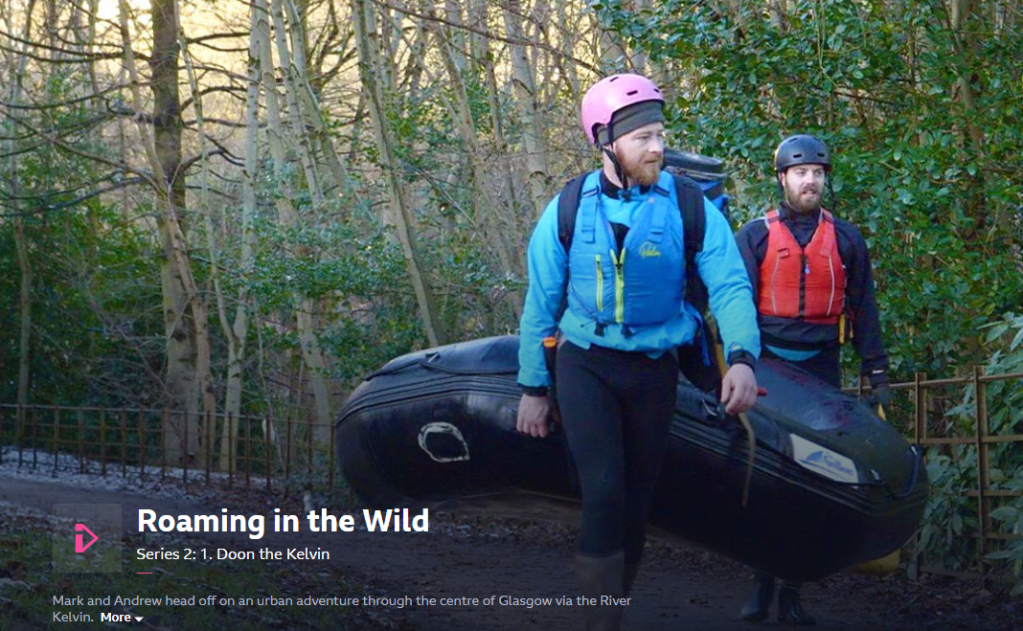
Roaming in the wild is a low key show where nothing much every happens. It follows two friends as they try to kayak/SUP/ski or walk around beautiful locations in Scotland.

Sit back, relax and enjoy the easy going vibe.

Gold Panning(Andrew)

Whoops!

This book was bought as a Secret Santa present for a colleague at work. He was moving to Elgin from Glasgow. It definitely 100% should not have been in Stornoway two years ago on Christmas Day. It should not have been opened by Iain TwinBikeRun as his Christmas present.

It was meant to be a thoughtful gift to a colleague. Instead, I mixed up the presents and my colleague received Iain’s gift and had no idea why ‘Santa’ had sent him a book called “So You Want to be a Gold Digger?”.

As I said, whoops!

But the book was only part of the gift, I’d actually bought Iain a one day gold panning course at the Leadhill Goldmining Museum.

Unfortunately, COVID and lockdown meant that all courses were cancelled in 2020 and they only resumed in August 2021. Luckily, we were able to book one of the few dates this year and popped down to Wanlockhead last month to find… GOLD!!!!!

But how do you find gold?

Well, first of all you need to dig out some earth and soil and gravel from a river. Then you have to sift it using either a large plastic ridged sieve or a plastic pan, just like the prospectors of the Eighteenth century. Once sifted you have to carefully swirl the lightest soil and gravel around the pan to separate it from any gold. Gold is a heavy element so it won’t move as easily as other rocks and stones. If you swirl water around the pan then the gold should sty in place, as it’s heavier than the water, and the soil can be washed away.

While the theory is fairly simple, it takes a lot of skill to move the soil and not the gold and to keep the gold in the pan while removing larger rocks.

“How much would you make in a good day,” I ask our instructor.

“About £200” he says, which is more than I thought, but to put that into context, there were 15 people on the course and over 4 hours they made around £50, which just shows how hard it is to find gold.

Unless you’re me!

And you have the gold touch!

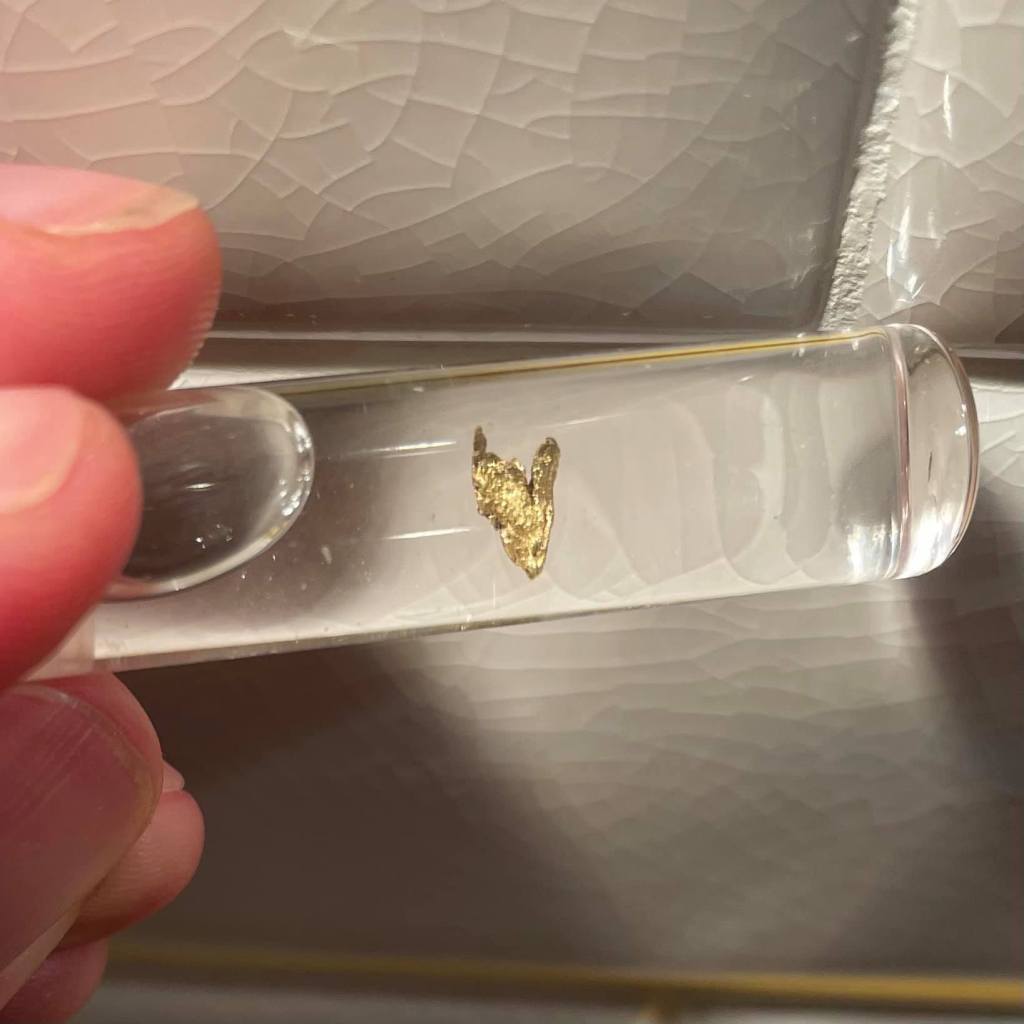
As I found £50 in just one pan – woo hoo! I’m going to be a trillionaire and fly into space like Jeff Bezos and Elon Musk! Looks at this beauty:

Is there gold in them there hills? Absolutely!

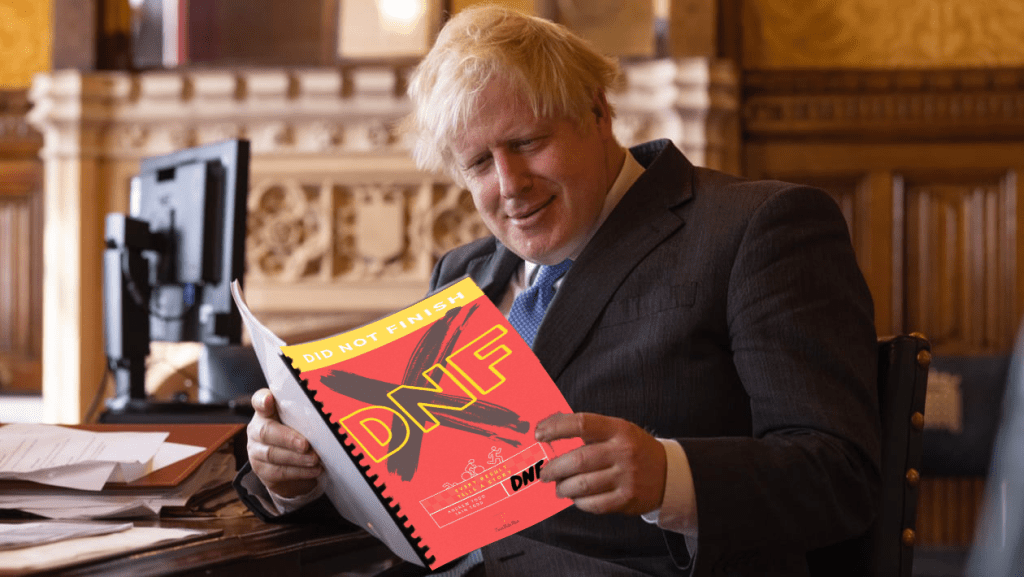
DNF – Released Nov 15th

DNF is available for pre-order here https://www.amazon.co.uk/gp/product/B09KTCL3G6

It will be released on Nov 15th.

Every one of our results tells a story, even the races we did not finish.

An extreme triathlon event challenges athletes to push their boundaries and be part of an unforgettable experience. Norseman is known among athletes as the most extreme triathlons in the world.

The race is point-to-point route starting with a four meter jump from a ferry into a fjord. Athletes then swim 3.8km to the beautiful town of Eidfjord, Athletes then cycle a 112 mile route which is very hilly and prone to bad weather. Finally, athletes run a marathon to the top of the 1850m peak of Gaustatoppen.

The race is limited to 250 competitors of which 160 finish at the mountain peak. The rest finish at the town below the summit. The originator of the event describes the race perfectly:

“I wanted to create a completely different race, make it a journey through the most beautiful nature of Norway, let the experience be more important than the finish time, and let the participants share their experience with family and friends, who will form their support. Let the race end on top of a mountain, to make it the toughest full distance triathlon on planet earth”

My twin brother and I watched a video on YouTube about the race. We were both instantly hooked. The race looked amazing.

My Brother and I grew up on an island in the Outer Hebrides. We regularly traveled by ferry to the mainland. It was a boring journey. I used to joke with my him,that one of us should jump off the ferry, just to add some excitement to the trip. Neither of realized that many years later we would both attempt to jump from a ferry,

There was only one problem with our dream. We had not swum since leaving school and we had never done a triathlon.

This is the story of how we tried to become Norsemen. It is a tale of 20 years of starting but not always finishing races.

The book is about the the joy of sport whether you come first or last.