




Every fortnight we cover the best and worst football songs from every club in the UK from our book ‘The Sound Of Football: Every Club, Every Song’. You can buy it here
Edinburgh City FC
Nickname: The Citizens
Ground: Ainslie Park (temporary)
Stadium Capacity: 3,500
Song: The Racecourse Red and Blues
The Citizen’s created history by becoming the first-ever club to win promotion to the SPFL via the Pyramid Play-Offs, after winning a second successive Lowland League title in 2015/16. In the years since they have consolidated their position in the SPFL.
Our search for a song did lead to a fantastic song by Chris Rogers, which was runner up in the Edinburgh FC Song of the Year competition in 2000. After checking more closely, we realised the Edinburgh FC stood for Edinburgh folk club. D’oh! However, the song, an elegy to what it means to be a football fan, is well worth seeking out because who cannot relate to this:
“My father should shoulder the blame,
For starting me off on this way.
It’s never been glory or fame
That brings me back day after day.
Obsession was born in the 60s,
Never was broken again,
A lifetime of pity began with York City,
A nothing-each draw in the rain.”
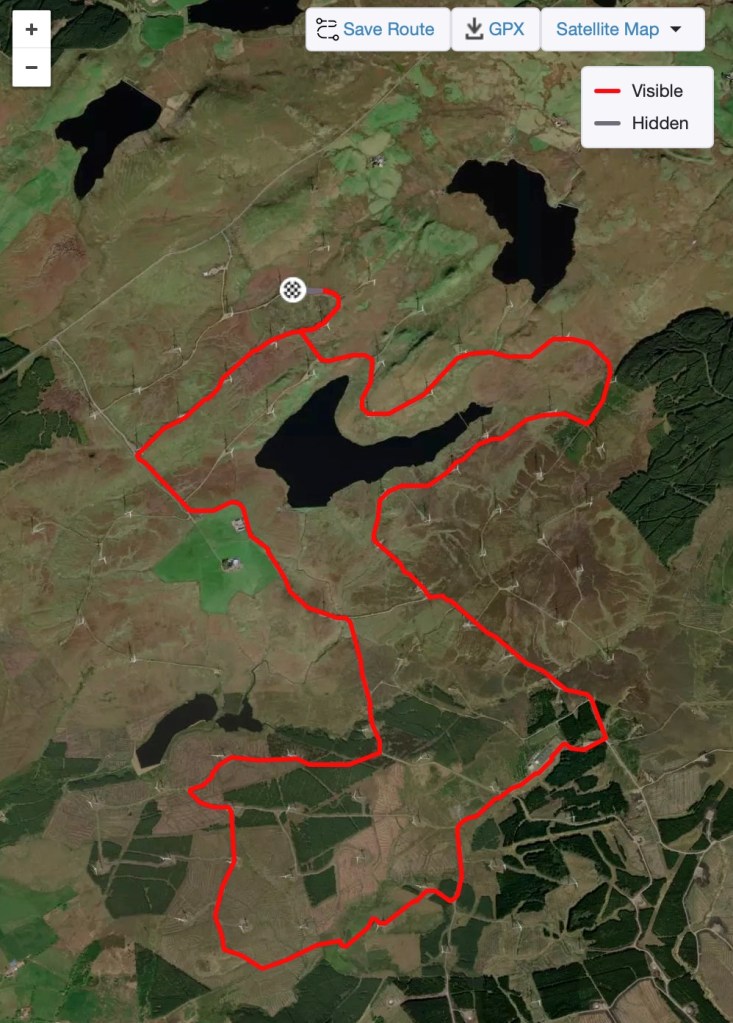
The “Blades” in race the blades refer to the propellors of the wind turbines at Whitelee wind farm, where the race takes place. As the tips of the blades travel at around 300 mph, even an F1 car would have trouble racing the blades. At around 8mph, I might challenge the blades for a race but I would be left in the starting block while it was doing victory laps.
Despite the impossible challenge of the name, Races the Blades is a great off road half marathon held annually in July. There is also a 10k version and ultramarathon option for those who prefer a shorter or a longer challenge.
I’ve entered before and you can find a previous report here. It’s a tricky race, with a rolling course and an annoying hill around the 9 mile point. But, it’s a scenic race with varied train taking you from moorland, to forests to loch side to moorland again with only the sound of the turbines remaining constant. Whumf. Whumf. Whumf.
This year the weather was challenging. The race is held at a wind farm and when it’s windy, it the best spot in the world to be out in the wind. Unless you’re running. In which case it feels like running into jelly. And today was very windy. Except when the heavens opened. Then we were soaked to the skin. It was a real proper Scottish four seasons race. It was just a pity that two of those seasons were hurricane and monsoon.
The race is very well organised and if you like raining on tracks, this is a great event, which is not too far from Glasgow.
Particular praise for the organisers recognising the most important thing for athletes starting a race – plenty of portaloos. Sometimes, when you get to a race, there is only a handful of portaloos for a few hundred runners. Race the Blades had over 20. Fantastic (if you’re looking for a toilet just before you start).
Overall, this is fourth time I’ve run this race and I recommend it to anyone looking for a challenging rolling course through moorland and forests. Just don’t try and race the blades.

Gourock Outdoor Pool is Scotland’s oldest heated swimming pool – and also the only one to feature on number one album cover as it was used as the cover image for Blur’s ‘The Life of Darren’ this summer.
Gourock is on the west coast of Scotland is not to be confused with its next door neighbour, Greenock. You can tell the difference between the two because only one regularly features in crime reports (Greenock), while the other is used as an album cover. They may be side be side on the Clyde coast, but Gourock is definitely the better of the two. And the less set of their third neighbour, Port Glasgow, the better. Port Glasgow is where the criminals of Greenock fear to go at night…
Gourock Outdoor Pool is open for Spring and Summer and closed at the end of September. Every Wednesday night is also hosts a night time swim with the pool open between 10 and midnight. You have to buy tickets in advance which you can do here.
Water Quality
The pool uses sea water so the first thing you’ll notice when you swim is the taste of salt in the water. Other than that, the water is nice and clear and the pool is heated to feel like a nice dip on a warm summer’s day, which is not something that happens a lot on the west coast of Scotland.
Swim Quality
I started swimming and was sure I’d swum 1,000 metres only to check my watch to find it was just 700m. I tried again and again I was short. It was only as I was leaving that a man mentioned that the pool was 33m and not 25m. D’oh! I’d set my watch to record 25m laps. No wonder it was taking me 30 seconds longer per 100m! So, in terms of swim quality, remember the pool is longer than average.
As well as being longer than average it also adopt an
Other people
There’s two lanes for lap swimming and a larger open area for casual swimming. It was quite busy on a weekday morning between 9 and 10 but by 10, there was only one other person in the lane.
Overall
A great spot for a swim – a bit of a trek from Glasgow by car, but the train station is next door, which may be easier if you want to try it out.
Every fortnight we cover the best and worst football songs from every club in the UK from our book ‘The Sound Of Football: Every Club, Every Song’. You can buy it here
East Stirlingshire
Nickname: The Shire
Ground: Ochilview Park
Stadium Capacity: 3,746
Song: The Curse
Former East Stirlingshire player Bobby McCully told the Daily Record a story about the man the club had just appointed its manager in 1974.
“I travelled to training with Tom Donnelly and Davie Robertson in a car and one night [the boss] pulled me aside.
“He said: “It’s some night eh, it’s freezing, you must have got soaked walking from the train station. I told him I always travelled by car with Tom and Davie, but the following week my expenses were missing.
“So I went in to see him and he just gave me the eyes and said: ‘You come by car, you won’t be needing individual expenses’. He’s a shrewd man.”
That man was Sir Alex Ferguson, and East Stirlingshire was the first club to spot his potential.
In 1974, Chairman Willie Muirhead was in Germany watching Scotland in the World Cup finals when he asked Scotland manager Ally McLeod for a name he could recommend as the club’s next manager. The name he suggested was Alex Ferguson.
Sir Alex, at his last press conference before retiring, reflected on his first appointment and how the world has changed since then:
“Forty years almost, 39 years as a manager; 1974, going from that day at East Stirling, eight players, no goalkeeper, to today, six goalkeepers, 100 players or something. I remember the old chairman was a great chain smoker, and I would say: ‘Can you give me a list of players you’ve got?’ And he’d start to shake, his cigarette was going at a hundred miles an hour, and I had to remind him again a couple of days later.
“He gave me a list of players – eight players and no goalkeeper. I said: ‘You know it’s advisable to start with a goalkeeper. Are you aware of that?’ So my first signing was from Partick Thistle, Tom Gourlay. God, he was big. I paid £800, but all the other guys were done for £100 signing-on fees, free transfers.
“And that’s your education.”
Sir Alex was the manager of East Stirlingshire for just 117 days. In that time, he galvanised the club, brought a new-found belief to the players, briefly took them to third place and, most notably for the fans, led them to its first league victory over rivals Falkirk in 70 years.
Remarkably, 117 days has had such an impact on one club, but East Stirlingshire has been Scottish football’s whipping boy for most of its existence.
It was formed in 1880 by a group of friends and neighbours in Falkirk. It took its name from a local cricket club, ‘East Stirlingshire Cricket Club’. Despite early success in the local leagues, the club has struggled since it was admitted to the Scottish football league in 1900. Financial problems at various times in East Fife’s history has seen it let players go to survive; it became the first club in the senior league to have a manager coach for free, while between 2002 and 2007 it finished bottom of the Scottish football league five times in a row, including losing 24 games in a row.
One of its unofficial songs is known as The Curse. It’s called that because every time the fans sing it at opposition teams (changing the lyrics each time), East Stirlingshire loses a goal before they get to the song’s end. A typical verse goes like this:
“1 man & 1 sheep went to play for Montrose
1 man & 1 sheep went to play for Montrose
1 man & 2 sheep went to play for Montrose
1 man & 2 sheep went to play for Montrose
1 man & 3 sheep went to play for Montrose
1 man & 3 sheep went to play for Montrose
1 man & 4 sheep went to play for Montrose
1 man & 4 sheep went to play for Montrose
1 man & 5 sheep went to play for Montrose
1 man & 5 sheep went to play for Montrose
1 man & 6 sheep went to play for Montrose
1 man & 6 sheep went to play for Montrose
1 man & 7 sheep went to play for Montrose
1 man & 7 sheep went to play for Montrose
1 man & 8 sheep went to play for Montrose
1 man & 8 sheep went to play for Montrose
1 man & 9 sheep went to play for Montrose
1 man & 9 sheep went to play for Montrose
1 man & 10 sheep went to play for Montrose
1 man & 10 sheep went to play for Montrose
The whole Montrose team is made up of sheep
The whole Montrose team is made up of sheep”
(Source: terrace chant)
Other versions for other teams refer to “one man & one bridie went to Forfar” and “one man & one ship went to Stranraer”.
Here’s a tip for East Stirlingshire fans: if your team, which needs every point it can get, loses a goal every time you sing this song – you stop singing it. However, the fans haven’t listened, and the club was relegated from the SPFL in 2016.
Buy the Sound of Football from Amazon.
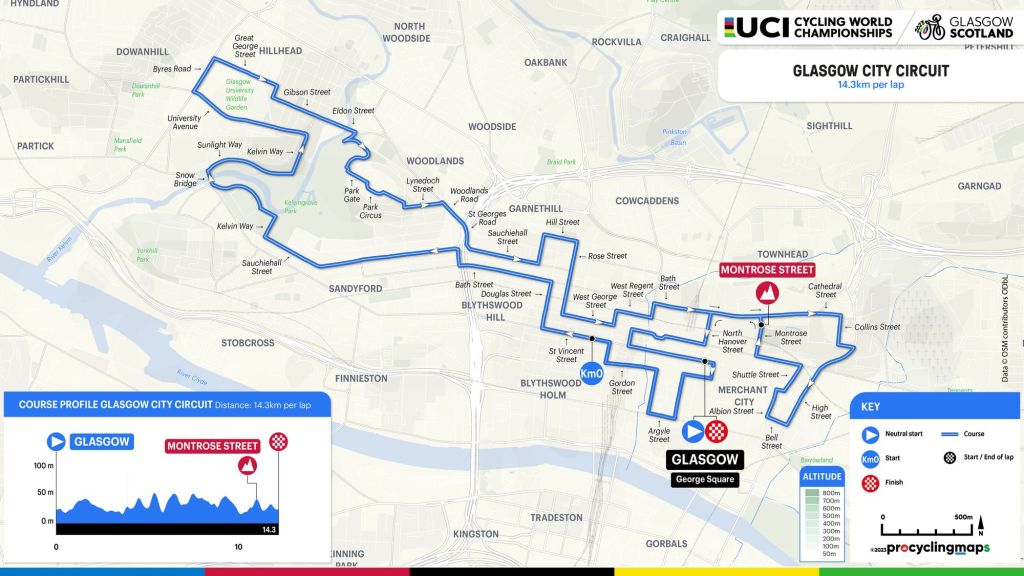
Apparently you could have received a fine if you rode the UCI World Championship Course in Glasgow in August.
I say ‘apparently’ because I read it on a Facebook post and I can’t find any evidence that it is true. Much like most Facebook posts.
However, as I also read that Nicola Sturgeon definitely kept all the SNP’s stolen money in a bag marked “Swag” in the back of her motorhome, I shouldn’t take any chances. It may be true so…
I definitely didn’t ride the UCI World Championship Course in Glasgow in the morning before the woman’s world championship race. However, if I had, I imagine, and I stress for any policemen reading, this is imaginary, it would have probably involved something like this…
First, the course received some notoriety before the championships began as it had 42 corners and would require the male riders to turn almost 500 times during their 12 laps of the course.
I can confirm there were a hell of a lot of corners on the course. And, in face, there were more than 42. And, not only that, there were also two u-turns. But that might just have been because I took a wrong turn and ended up cycling the wrong way along the course.
I blame the Marshalls because the first time I went round the course, they didn’t shout out at all. The second time they did and that helped me know which way to go.
Unfortunately they also shouted “The course is live, get off the course!” but at least I knew I was going in the right direction.
The longest climb on the course is Montrose Street, beside Strathclyde University. However, it’s not the hardest climb on the course. That would be Scott Street in Garnethill, which is shorter but is much steeper. Neither thought is particularly challenging, at least not at the pace I was going. I imagine it’s harder when you’re trying to win a World Championship and you’re trying to go as fast as you can.
It was great to see the course and to ride through the city without traffic lights or traffic to worry about. There were also no potholes as the council had filled them all in the week before.
If you check Strava you’ll know find that every Strava segment in the course has been claimed by a professional cyclist so if you’re looking for records then you’ll need to do what I saw one man do: fastest up Montrose Street on a Brompton bile. I’d love to see MVP try that one.
But I definitely didn’t ride the course and even if you saw me, it wasn’t me a, when I stopped at George Square, as you couldn’t ride through the finish line, a woman walked over and said “Good luck in the race today!”.
I was flattered. She must have thought I was a professional. Then I remembered it was the woman’s race and she must have thought I was an international female cyclist.
Which was handy, as international female cyclists are allowed to ride the course…












Every fortnight we cover the best and worst football songs from every club in the UK from our book ‘The Sound Of Football: Every Club, Every Song’. You can buy it here
East Fife
Nickname: The Fife
Ground: New Bayview Stadium
Stadium Capacity: 1,980
Song: The Cowden Family
When Rangers beat Hibernian 7 – 0 in December 1995, Gordon’ Jukebox’ Durie scored four times. You might expect a man who scored four goals to make every paper’s back page, but not this time. Gordon played with Paul ‘Gazza’ Gascoigne, and everyone remembers what Gazza did instead of Gordon’s goals.
Midway through the match, referee Douglas Smith dropped his yellow card. Gazza picked it up and tried to give it back, but not before, with a flourish, he pretended to book the referee.
Douglas Smith was not amused, though all the fans were laughing, and Smith grabbed the card back, turned the tables on the Georgie joker, and booked him for dissent.
When questioned by Hibs player Joe Tortolano about why he had booked Gazza, Douglas is reported to have told Joe: “He might be able to take the piss out of you, but he’s not taking the piss out of me!”
In 2012, Gordon’ Jukebox’ Durie was appointed manager of East Fife, the club where he began his career, but, due to illness, he only lasted a few months before he had to step down.
With his local knowledge, Gordon will know East Fife’s finest musical achievement. In 1996, East Fife fans made national news when they appeared on the BBC comedy programme ‘They Think It’s All Over’ to sing their version of the Addams Family theme-tune: The Cowden Family, directed at their rivals Cowdenbeath.
“They come fae near Lochgelly
They hivnae goat a telly
Their dirty and their smelly
The Cowden Family“
(Source: terrace chant)
Buy the Sound of Football from Amazon.

Our book ‘The Sound of Football: Every Club, Every Song’ has been updated for the new season with songs from clubs like the newly promoted Wrexham, and with a new format (as I’ve learned how to create a proper index). Songs are now divided into categories so you can quickly see which clubs have used the same ideas see by category which clubs share similar songs.
You can buy the new edition here: Amazon.

I’ve covered the White Loch before – see here – and for parking see this previous review. In 2022, I mentioned that you should check which route you plan to use to drive to the White Loch. That’s still the case this year, with upgrade work taking place to the A77 at the edge of Newton Mearns. And for that I have to say “sorry” as I think the company I work for might be partially responsible for it! Sorry! It’ll be great when it’s done though!.
Water Quality
In previous years, I’ve mentioned that you might feel a slight sliminess after you swim. This is due to peat and nothing to be alarmed about even if you might feel like the Creature of the White Loch Lagoon when you come out of the water. Currently, the water is clear and I felt clean when I came out of the water.
Two years ago the loch was ‘closed’ due to a blue-green algae infestation. This can occur after a long period of warm weather. Luckily, or unluckily, depending on your view of this summer’s weather, that’s not been much of an issue this year. Check out the Southside Swimmers Facebook group for the latest updates to confirm if the loch is safe to swim.
Swim Quality
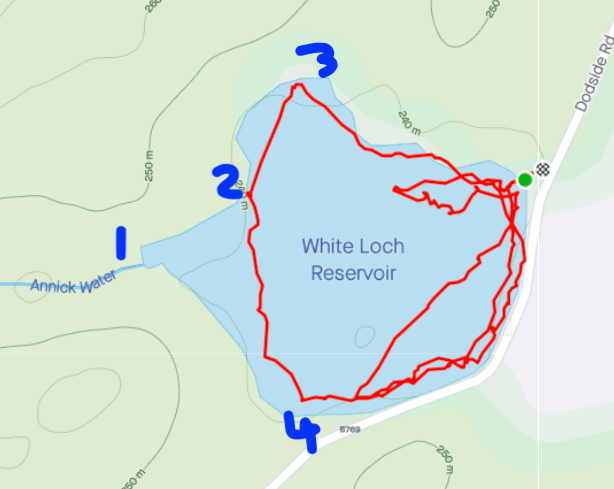
Excellent location for different lenghts of swims. If you just want a dip then a paddle round the entrance is nice and shallow. If you want to complete a full lap then it will be around 1000 – 1200 metres. You can aim for the opposite bank at 4, then a bright and obvious life buoy post at 2 then a wind turbine at 3 before coming back to the start.
I’m told that some people experience a slight pull in the water around the dam at 1 so keep away from it.
Other people
At least one person every time I’ve been. If it’s been sunny then I’ve seen 10 people here, including swimmers, paddle boarders, a canoe – and one dog swimming laps after it’s owner. It’s a busy place.
Overall
A great spot for a swim – but also a very well known one so expect to see other people particularly at weekends, evenings and if the weather is warm and sunny.
 Twin brothers swimming, cycling and running in Scotland