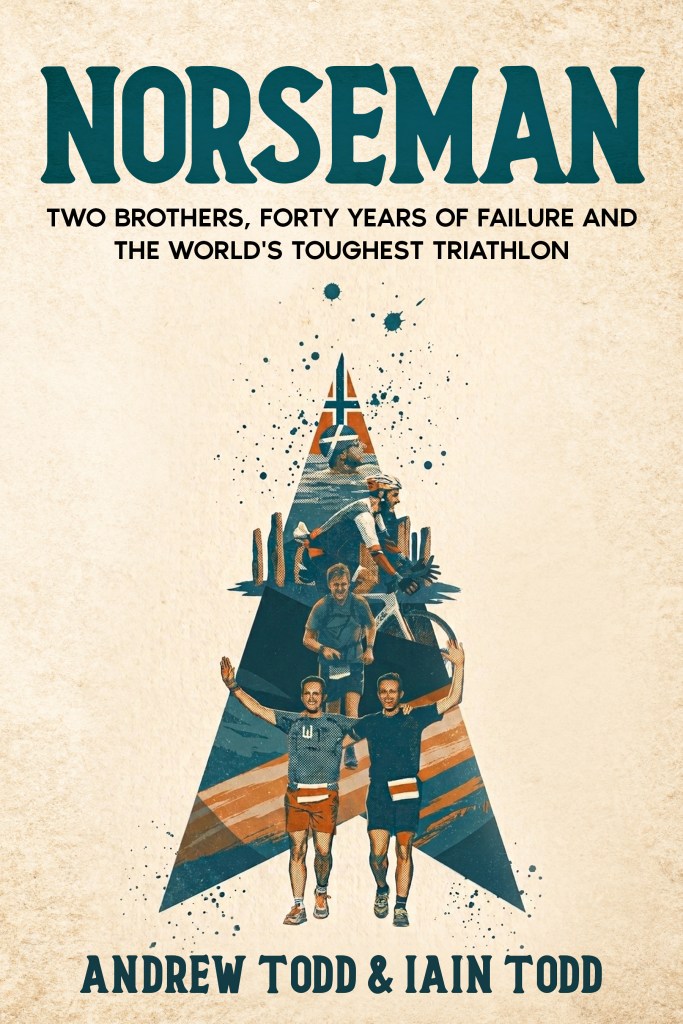
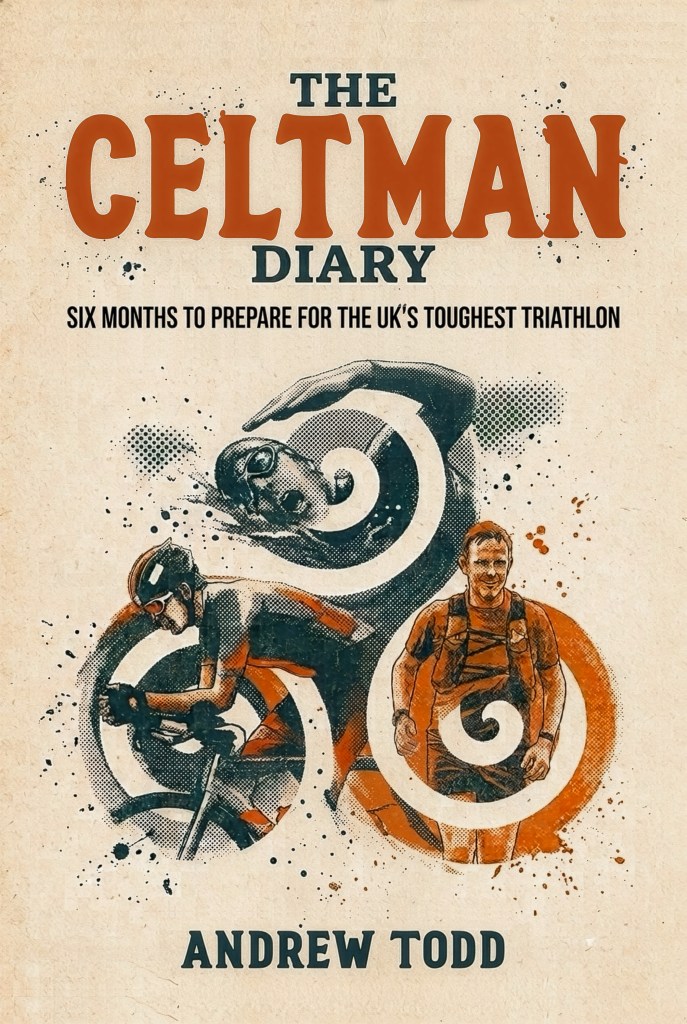
Andrew and Iain Todd write about endurance sport, football and the everyday absurdity of life. Twin brothers, occasional triathletes, and authors of six books between them.
Many thanks again to all visitors, regular readers, casual browsers, specific kinksters who are into TwinBikePorn but Google autocomplete sent them to the wrong site, and anyone might just have accidentally found themselves here.
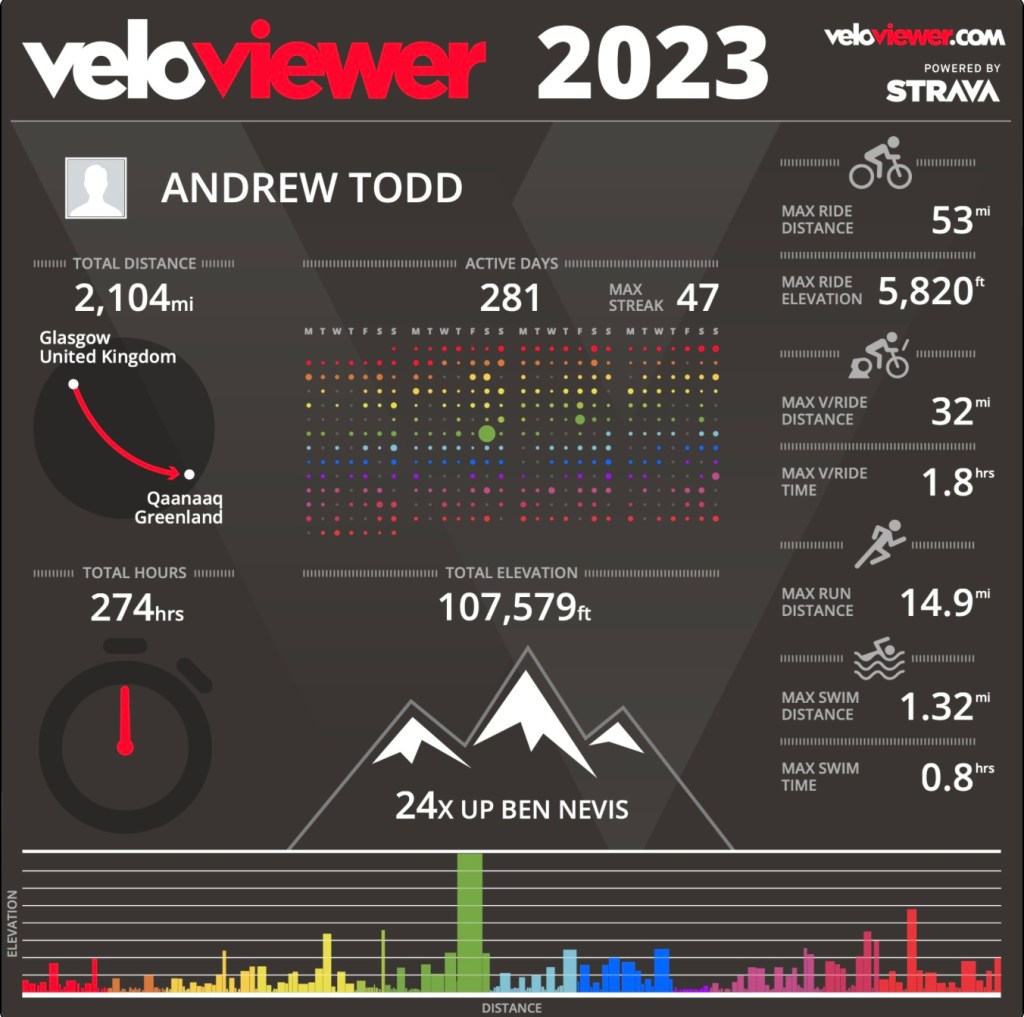
2023 saw the website visited over 13,000 times and saw a steady increase in new visits and visitors from around the world.
One month. Playing every day. What have I learned?
Pianos have 72 keys. That might sound obvious. But it’s more complicated that it sounds. Pianos have 72 keys but I only play 17 of them. 8 white keys to the right of ‘middle C’ – the middle key of the piano. And the 8 white keys to the left of them. And one black key (as part of a D chord). I don’t play the keys at the bottom of the piano and I don’t play the keys at the top. The reason for this is that the eight keys repeat. As do the black keys (of which there are seven). But in order to learn I’ve started with 16 and my muscle memory is starting to learn how to shape my fingers and move my arm for those 16 keys. Maybe by the end of the year, I’ll have played one of the other keys. But, for the moment, 16 keys is a lot less intimidating than 72. But if I want to stretch myself when learning, then I will have to… stretch myself and reach further.
Chords are easy and hard. Just as you master one chord, you add a second and try and move between them. Then add a third and watch your coordination fly out of the window. But practice helps, and soon you’ve learned to move between three chords – and then you add a fourth and it takes even longer to practice as there’s a lot more movements between all four. There is a reason it takes a long time to master a piano and it’s entirely down to having too many chords. If we had fewer fingers it would be easier to learn as we’d have less chords.
I’m not interested in classical pieces. Chopin? Borin’, more like…! But I do like film music and playing along with soundtracks.
I’m left handed – but not what it comes to playing the piano. I’m still learning how to use my left hand, it’s not as instinctive as my right.
There’s no one way to learn. I started the same day as my wife but we’ve both learnt how to play in different ways by following different training paths on the Simple Piano app. She’s now playing classical pieces, I’m playing along to pop songs. Neither approach is wrong but it does show how encouraging it is to be able to learn in a way that interests you. If I’ve followed her path, I might not have loved learning as much as I did. Same for her. The fact we can choose our own way to learn is a great feature of Simply Piano and one I would recommend to others.
Most of all, I’ve learned I love playing the piano and want to try now and learn something from a soundtrack which will starts to challenge me to use both hands and which should be within my reach after one month. Something like this…
C’mon! Some of these levels don’t even have the tune. You wouldn’t know it was Twinkle Twinkle Little Star. This should be called 3 levels of Twinkle Twinkle and “4 levels of plinkity plonkity look how fast I can move my hands no tune tinkling”.
I didn’t spot it right away, but I can’t help but hear it now. Every song on Simply Piano is a cover.
It seems appropriate. Everyone using the app is covering the song too. But it does make it seem like it’s training me less to be a solo pianist and more to be playing Uptown Girl in a wedding band.
When I look at the keys I see the computer game, Tetris. There are serveral falling blocks and each block is a different shape. You can rotate the blocks, you make them fall faster or slow them back down, but every second, you’re trying to make the blocks fit together in harmony, in an unbroken straight line.
With the piano, I imagine my fingers as the blocks, there’s several shapes but with four fingers and a thumb there’s only a limited number of shapes I can make with them. Each one of those shapes is a chord, and if I can only move them around the piano, sometimes faster, sometime slower, I can make them all fit together in harmony.
Which sounds simple in practice, like Tetris. But harder and harder in practice as one mistake means it’s game over.
Today I learned that Avicii never sang any of his songs. He always used a vocalist. Also like Calvin Harris who, despite singing on many of his songs, is more processed than a Kraft cheese slice. His songs should say vocals by Apple Mac.
I also don’t sing and, like Avicii, I can also play Wake Me Up. Or at least a four chord version of it that only sounds like Wake Me Up when you play Wake Me Up over it.
Now, if I can now learn how to use AutoTune, I might be ready to become the next Calvin Harris.
In my two previous January challenges – 31 days of fitness and 31 days of stretching - by the time I got to this point I was starting together into a routine… and into a rut. Not another run! Not another yoga pose!
But, at this point, it doesn’t feel like a chore to play the piano. It remains fun. It’s something I look forward to doing when I get home. And it still doesn’t feel like homework, even if the musical theory is now looking at more than just what the black blobs on a music sheet are called.
Mrs TwinBikeRun has been learning the piano too. Unlike me, she has stayed with the essential lessons on the Simply Piano app and has advanced through to level 3. I’m still working my way through chords.
Today, she decided to start chords and after an hour said “It’s too hard, my hands hurt!”.
So do mine but I’d never thought about it until she said. Of course our hands hurt, we’re bashing – I’d say playing, but bashing is a better description of what we’re doing! – away at the keys and it takes an effort to do that when you don’t use your hands for anything else. I type. I hold a knife and fork. I don’t do anything particularly tiring or taxing with my hands. I’m using my little pinky to lift up a truck. Instead, this is the first time I will have been using my hands for long periods of time and apply force and strength while my fingers are fully extended. It’s got to hurt – but not equally. Some fingers are stronger than others, I’ve realised. And that’s when I stumbled across this:
There is a sub-genre of piano videos to teach you how to strengthen your fingers, even down to looking at an individual finger and working on it.