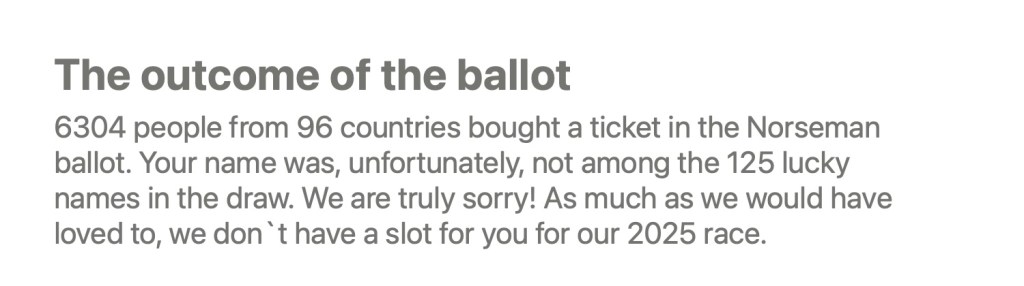
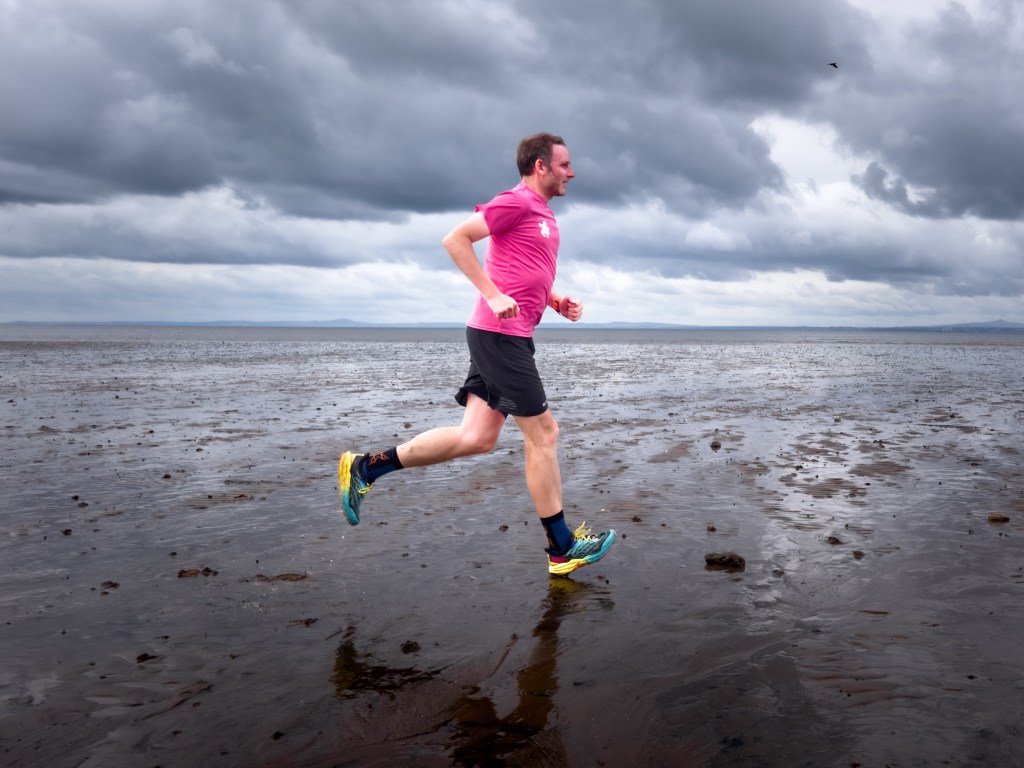
There are two ways to enter Norseman. The first is through a ballot. There are roughly 250 places for around 5000 entrants and the organisers have a lottery to decide the places. The lottery is filmed and broadcast on YouTube.
The second way to enter is by using X-Points. These are points gained from previous entries or for taking part in other XTri races. Last year you needed 218 points to enter Norseman. This year I had 280. But that was no guarantee of entry. The XPoints are allocated to the top 100 entrants using points, starting with the highest points and then decreasing to the hundredth. This year, the 100 entrant had 313 points so, while I had enough points to enter last year, the points total had increased by nearly 50%.
Oh well, at least I don’t have to spend the next year sitting on my bike indoors for hours at a time. I can do other things like…
Well…
Damn, I’ll need to find a new hobby! 🙂
TwinBikeKnitting anyone?
One of the best features on Strava is the heat map. This shows you the most popular routes near you by highlighting the most used/recorded routes used by the people on the app. Even better, it also suggests a route. So, if you’re somewhere new, you can see where other people are running and you can get a suggestion for a route to follow.
I’m not sure that Strava knew I was on holiday though as the route it suggested was 8 miles cross country around the southern end of Orkney. Luckily you can adjust the distance and I worked out a four mile route away from the main roads and around some coastal trails.
I’d definitely recommend using Strava when you’re away but it is a pity it doesn’t also have a no-Safari option. No, that doesn’t mean it bans the popular Apple internet browser, Safari. Instead, it could avoid the occasional detour through a field of sheep as part of the route it showed was also a field for the local farmers. Though, given this is Orkney, maybe the locals are always wandering into the sheep fields
(And the Orkney folk would say the same for us Isle of Lewis folk!)

“Headshot!” shouted the Stormtrooper from Star Wars before squirting a water pistol in the face of a runner racing towards him.
“Hee hee hee hee!”
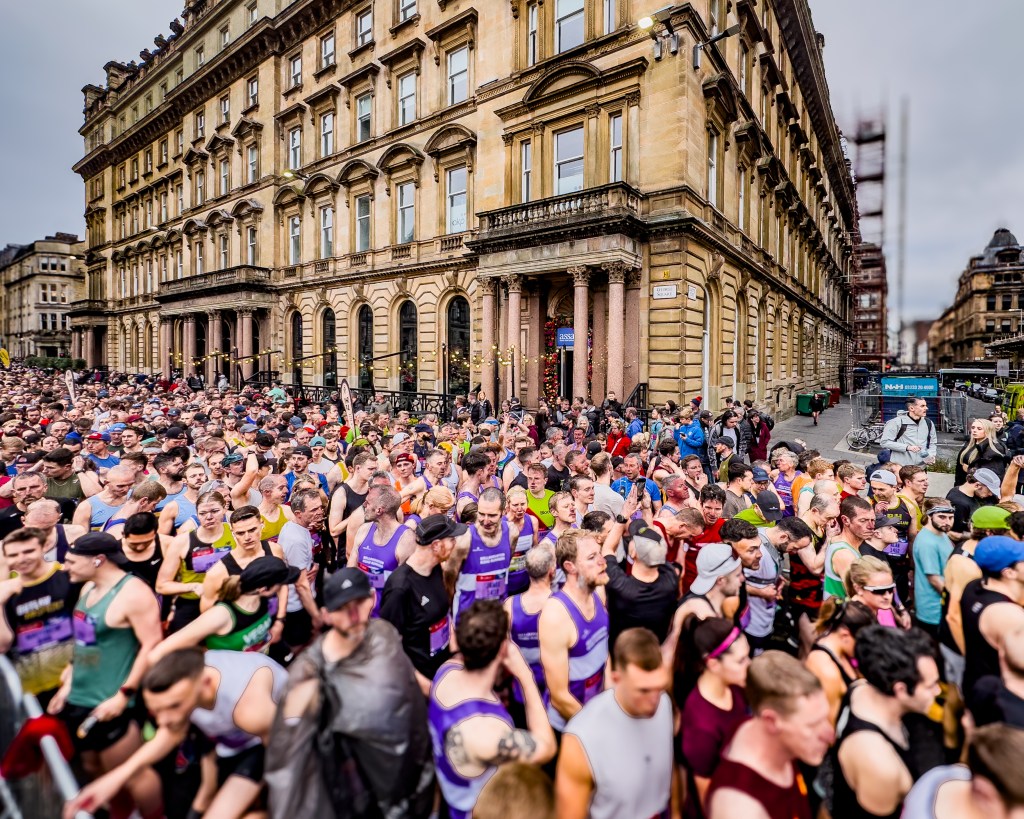
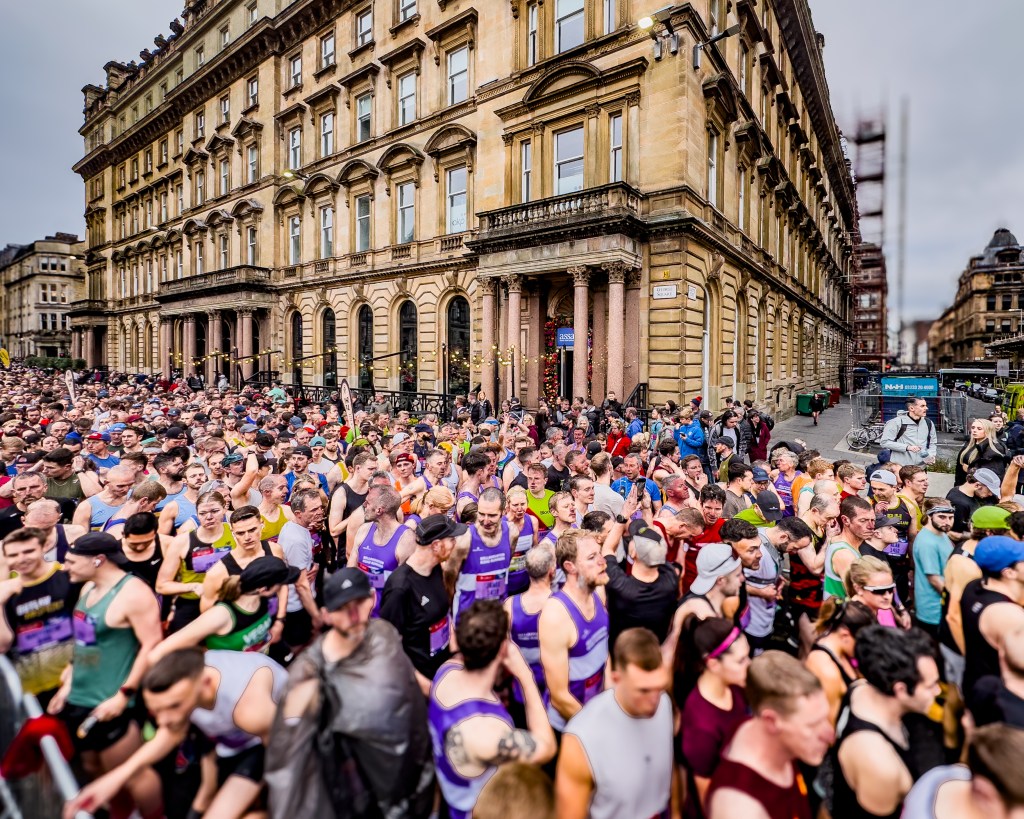
I only saw a handful of runners in fancy dress at this year’s Great Scottish Run. This was a surprise as it was also the largest ever event with nearly 30,000 runners. I thought in proportion the number of runners in fancy dress would also increase but, other than the stormtrooper committing unwanted liquid assaults across the course (though to be fair, it’s not like Stormtroopers are ‘good guys’!), the only other person in fancy dress was Batman. Which is to say that a runner was dressed as Batman, not that Batman was in fancy dress as a rhino or a deep water diver.
Not the the Stormtrooper was the strangest sight on the course. Around mile five I saw a man jogging while juggling three balls. I assume he must have been juggling them from the start. It would have been strange for him to get to mile five and then think “Wait! I’ve got three balls in my pocket, I could juggle them!”.
I assume there’s a real skill in juggling while jogging. For a start you need to throw the balls forward to run and catch them while moving forward. There’s no point throwing them straight up when you would just run under and passed them.
But why juggle? At what point in their juggling career did they think: “this is no longer a challenge, I should jog too!”. Or, in what point of their running career, did they think: “Running half marathon is easy, I need a challenge: I could juggle!”.
And did they build up to this? Did they juggle a 5k, a 10k and finally the Great Scottish Run? Are they building up to a marathon or an ultra? Or are they going to add more balls until eventually they’re juggling 10 balls and spinning a plate on their head?
And then, after writing that paragraph, I goggled jogging and juggling and discovered that, yes, it was a case of adding a challenge to a run: https://www.bbc.co.uk/news/uk-scotland-edinburgh-east-fife-68451536
And it’s an actual sport. Well, I say sport. According to this report there are 600 jogglers competing around the world. More people take part in Chess Boxing, which is less a sport and more a sport based on a random word generator.
I didn’t juggle but I did have a self imposed restriction too: I ran with Iain TwinBikerun!
Iain was recovering from COVID so I ran with him for the first nine miles until he started to get too slow, and then, good brother that I am, I left him and ran to the finish line.
The route felt a bit more open this year, and I think that may be as a result of the large number of runners taking part. The race was split into several waves, and some of the large crowds from last year were better dispersed around the course. However, due to the number of people taking part, the start was severely delayed as it took nearly 25 mins to reach the start line.
The end was equally busy and we had to queue for a finish photo with the finisher’s bell. As we queued the man in front of us, an American, asked if we could take his photo as he didn’t have a camera and could we then email him the results later. We did but it was only in the evening that I realised we’d missed a golden opportunity: we should have photoshopped his photos!
Overall, the Great Scottish Run is extremely well organised, with plenty of water stations, good support throughout the course and exactly the same complaint I had as last year as they used the same course: it’s still one of the least scenic routes you can design through Glasgow. But it is almost flat and therefore perfect for jogging. And juggling.
BBC’s Scotland’s The Adventure Show has a programme dedicated to Celtman available on the player. You can find it here.
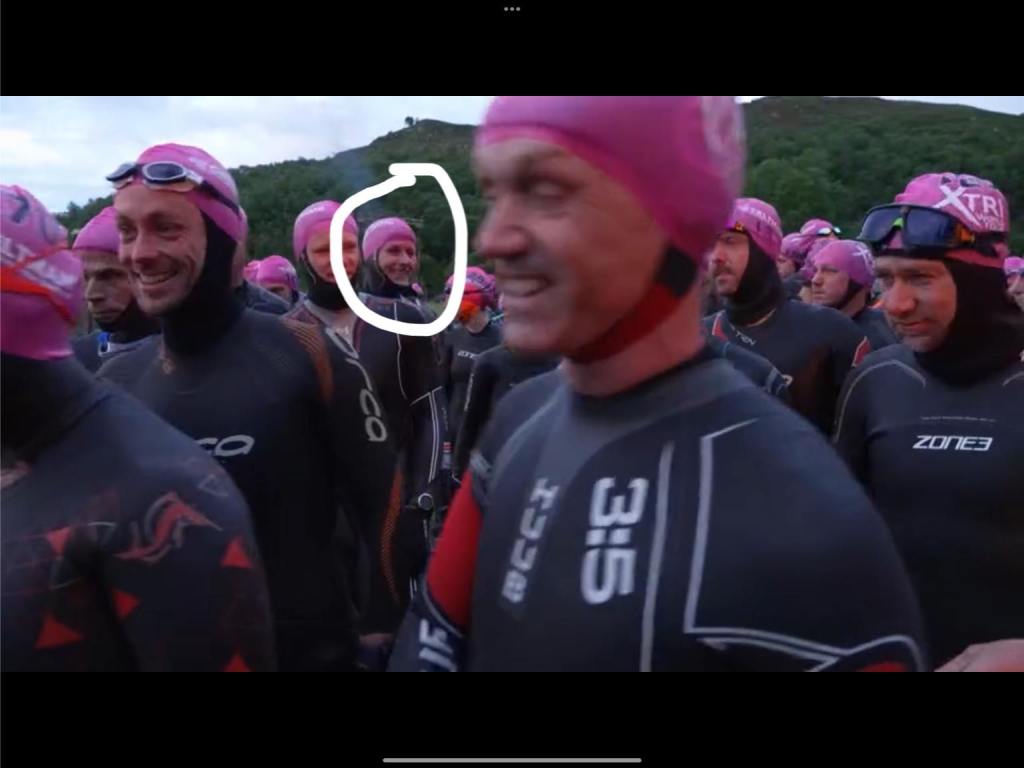
And, if you look closely, you can just about see my nose.

I love Frosties. They’re great. But I can’t have them because, once I have one bowl, I have to finish the entire packet. My name is Andrew Todd and I am a frostaholic.
Instead, for the last few years, I’ve had a bowl of All Bran. A cereal that looks like a thatched roof, tastes like a thatched roof and could be used to thatch a roof if a thatcher ever runs short of straw.
All Bran is meant to make you regular so, if Frosties can be said to be great, and Coco Pops can be said to make the mile go chocolately, the All Bran be said to make you shite yourself faster. Which is marketing slogans go, is not the best, I’ll give you that. But, once you take away it’s bowel benefits, what else can you say about All Bran? If Jacob Rees Mogg was a cereal, he would be All Bran, I think that’s it.
That’s why it’s become harder and harder to motivate myself with breakfast when I cycle first thing in the morning, straight after getting up. Normally, while riding, I will think, “I can’t wait for breakfast!” But, with All Bran, it the breakfast equivalent of a queueing at the Post Office. It doesn’t inspire me to pedal faster to get to my plate. I need a new cereal, one I can look forward to each morning, one that will inspire me rather than one that feels like a prescription. I need Frosties.

Findhorn is a small village in Moray famous for its eco-living and for the Findhorn Foundation, a spiritual community. It’s also has one of the nicest beaches on the Moray Firth.
REVIEW
Ease of Access: There’s plenty of parking beside the beach although a new parking barrier has been introduced in 2024 to prevent access unless you pay £1 entry. The barrier accepts cards so there’s no need to find a pound coin, just use your card or phone and you have access to lots of parking right next to the beach.
There’s plenty of grass beside the car park and it’s easy to walk to the beach, even barefooted.
Water quality: Very clear when I was there in the middle of July 2024. There’s also plenty of room to swim before the beach starts to drop away. You can easily move away from shore and still, not only see the bottom, but also find places to stand and keep your head above water. The water temperature was c15 degrees.
Swim Quality: Excellent – at high tide, the sea was calm and there were views straight across the Moray Firth. Watch out for the estuary though – it looked too calm to be natural so I assumed that it was full of undercurrents. Afterwards someone else told me it also had a “whopping great whirlpool”, not sure if that’s true but I’d definitely avoid swimming near it and head east instead along the beach only.
Other People: Findhorn Beach is popular but, at more than five miles long there’s plenty of quiet spots away from entrance to the car park.
Would I go back: Yes (and have been whenever I’m in Moray).

There is a chapter in the novel ‘Trainspotting’ titled “The Worst Toilet in Scotland”. I’ve read Transporting, I’ve seen the film, and all I can say is that author Irvine Welsh must have missed out the Lidl in Musselburgh.
Scurry to the Sea is a point to point race starting in the Pentland Hills and finishing with a run along Musselburgh beach. There is an 8am bus to take you from the finish line to the start, to make it easier to park at the end and run from the start. But, as Iain TwinBikeRun and I were both driving, we met at the beach, parked one car there and drove the other to the start. On the way, we thought: “We can avoid the normal queue for the toilets before the race by stopping on the way – and, look, there’s a Lidl, it’s bound to have a toilet.”
The first red flag should have been raised when we couldn’t get to the toilet without going into the store and asking to squeeze past people queuing at the till. One way doors didn’t allow access to the toilets behind the till until you’d queued.
The second red flag was that this is a Lidl and Lidl operates on a one employee, one massive queue, one toilet model. If it costs money, Lidl doesn’t pay it.
The third red flag was Iain going into the toilet first and coming out and saying “Don’t go in there.”
Like a driver for Ferrari driving round the track, I thought the red flags were urging me forward and I went in.
I came straight out.
This is a family blog and Trainspotting is a graphic and adult novel of drugs, abuse and squalor so all I can say is: Chose life. Choose crossing your legs. Choose any other toilet in East Lothian.
The race itself was well organised and there was plenty of time at the start to get ready. The first mile and a half is a straight climb/slog up to the summit of Swanston in the Pentlands, before the rest of race, around 10 and half miles descends down through Edinburgh, around Braids Hill, out through Brunstane, finishing in Musselburgh.
Most of the race is off road or through parks or cycle paths so it never feels like you’re running through a city. However, with quite a few streets and turns on the way, it was helpful that Iain TwinBikeRun knew the route, as, even with other runners around, and markers to point in the right direction, I think I would have got lost.
Overall, an unusual challenge, a 10 mile downhill section, and a good run to start waking the legs up after Celtman.
Transition 2A
And after eight hours on the bike. Thank you. A portaloo!
The transition is beside the car park, which makes it easier for supporters as previous year had seen the two separated and supporters having to push the bikes along roads to get back to their cars.
There were a handful of people in transition and it was still dry and clear but with weather reports of some rain I also grabbed my waterproof jacket along with my running vest. I also used waterproof trail shoes after people had reported earlier in the week that the first section was quite boggy.
Iain offered to run the first section back to Kinlochewe, which was good as…
Kinlochewe to Transition 2B
The change from cycling to running is always tricky. You change from cycling at 15 mph or faster and then must adjust to running at a marathon pace of 6 mph (or slower).
My legs also felt heavy as we left transition so it was good to have Iain run alongside as it forced me to run more than I would have if I’d been on my own.
The first section is along the Ben Eighe trail. Largely flat with a good trail route to follow. The route circle round and then through Kinlochewe before joining up with another path leaving Kinlochewe to the west.
I say path. It was only a path to the extent that others had followed it. It was no more a path than Victoria Falls was a waterfall. It was mud. Just mud.
Iain stopped at this point so didn’t see the worst parts of the path but for the for the next 5 km I tried to move as fast as I could but it was only just faster than walking pace. Every step was an attempt to find solid ground, or at least ground that didn’t swallow my foot.
To make it worse, it started to rain heavily and I was glad that I brought my waterproof jacket. I raised my hood and kept squelching forward.
I knew I had over three hours to make the cut off at T2A for the low level route so time was not important. But I tried to go as fast as I could in this first section. I knew I had plenty of food at T2A and was walking the low level route so could use the last of my energy to get through this section as quickly as I could. I ran bits, power walked others and passed a few people trudging through the mud ahead of me.
After 5 kms, the path cleared and moved to a wide fire trail leading to a very steep climb. At the top, the rain finally stopped and I was able to run down the hill and to the first support of the day. A table with some very wet biscuits and a couple of large drums of water.
“How far to the finish?” I asked.
“About 10 kms,” they said.
Which was longer than I thought but no more than a hour and half away even at my slowest speed.
I continued to alternate running and walking (with the walking taking longer and longer each time) and enjoyed running along a loch and through a glen as I made my way back to the main road between Kinlochewe and Torridon.
At the road, after about 5kms it started raining again. A deluge of raindrops bounding off the road.
I kept my head down and just thought how, in another couple of miles I would be finished this section and able to dry myself off and change into fresh clothes.
“How far to the finish,” I asked a man walking towards me.
He looked at me like I was daft. “It’s there,” he said, “pointing 100 metres ahead”.
I must have misheard the distance before. I was expecting another couple of miles but to see the finish ahead was a relief, and, even better, looking down the road to Torridon, I could also see the skies were clearing and it would soon be dry.
“I’m there,” I thought.
Transition T2B
“But where are you?!?” I asked.
I arrived at Transition T2B, a small car park at the base of Ben Eighe, and Iain was nowhere to be seen. There was a small canopy set up to provide some shelter for checking bags and, hurrah, another portaloo, but beyond a few supporters and athletes bustling around and getting ready to leave, there was no sign of Iain.
“Where are you?” I phoned.
“I’ll be there in a minute.”
Five minutes later I can see my car on the road and Iain getting out. Has there been an accident? Has something happened to his car and he’s had to be picked up by my wife?
“No, I went back to the hotel because I thought I had time to empty the car. I then thought there was no point driving back, if I could get a lift instead. As we could then avoid having to come back later to pick it up. But you were too fast!”
I didn’t feel like it. It was around 2 hours 20 minutes from T2A to T2B. Originally, I’d hoped for around two hours but that was before I knew about the mud and before I saw how tricky the first half could actually be. In the end, I was happy with my time, and, having changed clothes into hiking gear, I was dry, I was well fed, and I was ready to finish the race.
“Did anyone leave their light?”
D’oh. That was me.
At T2B the organisers will check your bag to make sure you have all the mandatory kit. I had to take everything out, show it to the volunteer and they then confirmed I could carry on. Unfortunately, I’d not picked up my head torch when I repacked. Not that I was thinking I would need it but, knowing how bad it was last time with Iain, I knew how important it was to be prepared for the worst conditions.
T2B to finish
Ready to go. There is a short walk along the road to get to the start of the low level path. Then a steepish climb on a well worn rocky trail for a couple of miles to get to the valley that runs around the base of Ben Eighe.
The organisers say not to confuse the low level route with an easy route. It’s not easy. And they’re right. In the rain, it’s a technical and slippy route. Even in the dry, it has plenty of climbing and is a challenging route with a couple of river crossings and some short sharp climbs even on the level floor of the valley.
At the start of the first climb, I take out walking poles. While allowed, there is a unwritten rule to try and avoid using them.
“Remember to put them away if you’re seen by the photographer,” they joked at the briefing. But, at this stage, I knew the poles would help take some pressure off my legs and would make the last stretch easier. I had no second thoughts about using them.
My second boost was the one thing I’d been looking forward to all day. My one request for Iain was to have a cheese roll at the base of Ben Eighe. And, when he picked up the chips and cheese, he also picked up my roll. That meant that when we came to the first rise, and looked back down the hill towards T2A, a few hundred metres below. I sat down and had a picnic. An XTri picnic. An Xpicnic? And it was fantastic. Finally, some proper food, eaten at the base of a mountain, with the sun breaking through the evening clouds. I could not have asked for a better meal.
From there, as the sun started to lower, the views along the valley were clear and bright and lifted my spirits as I contemplated the last few hours ahead. I had no doubt that I would complete Celtman. It was just a case of one foot in front of the other until it was done.
In the opposite direction, we could see runners and supporters coming towards us. These were the athletes who had made it onto the high level route over Ben Eighe.
“Congratulations! Well done!” We said as they passed, standing aside so as not to block the paths.
I wouldn’t know what to do if I had to take part in the high route. Racing on a dangerous summit has no appeal to me. I was happy to be on the low route, but I admired all those who had made it to the high route.
We carried on, enjoying the hike and making no attempt to run. After an hour, we were passed by another athlete from the Glasgow Triathlon Club. She’s been an hour behind me on the bike and was no overtaking us on the run. She didn’t look like she’d been out for five minutes, never mind 15 miles across the mountains, or 120 miles around the NC500.
“I bet you’ve not had a cheese and ham roll,” I said.
After crossing a small wooden bridge, the low level route starts to descend toward the coast. First through a forest, then past a steep gorge, then into Torridon Estate to walk about the coast road toward Torridon. I thought there would be more midges at this point but thankfully apart from a few small spots, they were largely absent.
It was around 8pm when we could see Torridon and could see another couple of miles of waling to finish. The sky was starting to turn yellow and pink and it was a cracking night.
“I don’t think I could have asked for better weather,” I said to Iain.
“You could have had a hell of lot worse,” he said, clearly remembering his own race. At this point, we’d been soaked to the skin even with strong waterproofs.
“Thought maybe should have worn some suncream,”
“Eff off,” said Iain.
As we neared Torridon we could see the athletes of the high course run along the shower as they approached the finish line with a final loop around the shore.
“Do you think we’ll be confused for the high level route?” I asked.
“What do you think?” said Iain, indicating our hiking clothes.
“Probably not.”
As we walked through Torridon, the homes on our left, the sea on our right. I started to dismantle my walking sticks.
“What about now?” I asked.
As a high-level runner with oak thick thighs ran passed us.
“Still no.”
“But I should run to the finish too.”
And, with the finish line in sight, an inflatable blue arch with “Celtman!” across the top, I started to run the last 25 metres.
20 metres.
10 metres.
5 metres.
And…
“Thank you!” I say to the volunteer who offers me a Celtman beer.
“Thank you,” I say to the volunteer who takes my dobber and GPS.
And
“Thank you,” I say to Iain.
Post race
The hall is packed. It’s warm and a queue for food stretches along three walls. But I’m finished. I’m happy. I just want to eat, get home and sleep.
Last time we were here the hall was nearly empty and the food was terrible. I suspect, due to the terrible conditions, no one stayed as they wanted to get home to get dry. But this time the spaghetti and meatballs are delicious and there’s a great atmosphere as athletes and supporters linger.
“I’ll call Mrs TwinBikeRun to pick us up,” I said as we finished eating.
“I’ll be there in two minutes,” She said, so we left the hall and started walking towards the hotel, thinking we’d be picked up any minutes.
10 minutes later we were almost at the next village when she pulled up.
“I thought you’d be two minutes,” I said.
“I through you’d enjoy the walk,” she said.
And she was right. I did. The walk. The run. The bike. The swim. I loved every minute of it.
Bike to Kinlochewe
The first section of the bike race has a couple of undulating hills from Sheildaig to Torridon then a 10 mile stretch along the valley floor from Torridon to Kinlochewe. At this point there’s plenty of cars trying to get past as supporters leave Sheildaig and try to get in front of their athletes. However, as a large stretch of the valley is single track it just creates a convoy of bikes and cars from Torridon onwards. The cars cannot pass the bikes and the bikes cannot pass the cars. Everyone goes along at the near enough the same speed. It’s only after we reach Kinlochewe that the road clears and normal riding started.
At this stage, with everyone bunched up, it was impossible to avoid mini pelotons forming. There wasn’t enough space between cars and caravans to spread out. It felt like a fast start, but I tried to avoid looking at my computer as I didn’t want to fall into the trap of checking my time or speed or distance constantly as, with many hours ahead, I knew the result would always be “not far enough, not fast enough, and nowhere near finishing”.
The only thing I would do was glance my watch and check the time to see if I needed to ear. I wanted to eat something every 20 – 30 minutes. I had a feedbag on my top bar filled with gels, jellies and flapjacks. My plan was to keep it stocked up by replacing everything every time I saw Iain. I started eating with the flapjacks. Half a bar. Then a gel. Then back to the flapjack. Repeat for the rest of the day.
Kinlochewe to Gairloch
I met Iain just after Victoria Falls. Not the one in Africa. I wonder if Victoria even knew how many things were named after her and whether she ever said “wait a minute, we have one’s the world’s biggest waterfalls named after me, I don’t need a stream in Scotland.” I suspect the answer was never as today Victoria Falls is not just a waterfall in Africa. But with cultural awareness changing and bids to rename places with the original names, maybe one day Victoria Falls can revert to its original name of “That river with a bit of a drop”, which sounds better in it’s original Gaelic, where everything is named after what you can see. Big Hill? Ben (Mountain) More (Big). Say what you see geography.
At this point, I’ve been switching regulalrly between TT bars and normal riding. I was feeling good and with long straight roads with little elevation, it felt natural to make the most of the riding.
“Enjoy this,” I would tell myself, “you’ll never be here again on a bike!”
Which sounds fatalistic. Enjoy this and then you die. But I found it really useful to put the race into perspective. I had no intention of ever taking part in Celtman again. I know I won’t be back here on a bike so I should feel lucky to be here today on a day when the sun was shining and there was not a breath of wind. Every green hill was like an emerald. Every blue loch shimmered. Everywhere I looked was a spectacular view. How could I not enjoy it?
Gairloch to Poolewe
I could be climbing for a start. The first quarter of the race is relatively flat. Gairloch, a small coastal town is the point that the route turns back inland and, to remind you that land exists, there is a large wall of it as you leave the town. A steep climb followed by some shorter climbs from here to Poolewe, a central town with a nice descent leading to an old Victorian bridge and a nice flat section beside Loch Ewe.
By this point I was looking for Iain again as I realised two things: first, my feedbag was too loose and swung left and right on my top bar. I constantly had to nudge it back to the centre with my knee. And, second, I’d lost my bike computer. Or, more accurately, I’d lost Iain’s bike computer. It must have come off my frame at some point the previous five miles but I’d not noticed when it happened. I switch my watch’s tracking on and started recording from here. I was annoyed to have lost the computer but as I was avoiding looking at it anyway, it made no real difference to my race.
“As long as I don’t lose anything else,” I thought, remember the man who rode past about an hour ago and who then showered me in plastic fragments as parts of his bike exploded. I couldn’t work out what had broken, and either could he. He was still able to ride, but there was a shower of small plastic fragments thrown up in the air and no idea as to why it happened.
“I don’t need my computer,” I thought.
Poolewe to Gruinard Bay
“But I do need my water bottle!”
It disappeared somewhere close to the bay. Just like my computer I don’t know when it vanished. Maybe a phantom was taking it. A phantom who was now equipped to take on a long distance triathlon. Casper the Friendly Triathlete.
While the bike route is pretty spectacular most of the way round, this particular stretch is 90s boy band: another level.
The road curves back to the coast and hugs the spectacular west coast with crofts, machair, forests, hills, heather and beaches spread out before me. It also features the steepest descent of the day as a mile long descent from the viewpoint overlooking Gruinard Bay takes you back inland after teasing you with the finest views the NC500 can offer.
Luckilly, I met Iain just after Poolewe and he had a spare water bottle. As I put in my holder I reaslied the crash had caused more damage than just to my dignity. The holder was cracked and barely held the bottle securely. It rattled as I rode. I’ll need to keep an eye on it, I thought. Which I did, so I was able to see it shake itself loose and bounce down the road as I finished the descent from the bay. I stopped and turned round to pick it up. And promised to keep an even closer eye on it as the last thing I wanted to happen was to race the second half without any water.
Gruinard Bay to Corrieshalloch
In my mind, this was going to be the hardest section. It features two long climbs, one through trees and another across the moor before reaching Corrieshalloch Gorge, a narrow cleft in the landscape with a proper waterfall (Victoria, I’m looking at you).
By this point, mid-morning to lunchtime, I decided to swap to a short sleeved t-shirt. It was getting warmer, the wind couldn’t blow out a candle, and the sky was getting clearer.
I alternated resting on the tt bars with cycling normally. If flat or downhill I would use the bars. If uphill, I would cycle with my handlebars. The only downside of being on my TT bars was that I couldn’t see the long views over the moorland to the south. Everything was tarmac.
The first climb was around 3 miles and I just ground it out. With trees surrounding the road, it was hot and more suffocating. I stopped once with Iain to drink and told myself “get through this one and there’ll just be one more climb to go. Then it’s either flat or downhill to the end.”
At the top of the climb, the road opens to the moor and there’s a few long gradual descents to rest legs and get breath back. It was fast going, and I tried to enjoy it while knowing another climb was coming.
Until it didn’t. I looked up. I was at the viewpoint for the gorge. Iain was parked and took a quick detour to see the view to the north, the gorge opening up and leading into Loch Broom and to Ullapool. Mountains turning to moorland turning to croft land turning to shore and sea. Grey, brown, green and blue. All of Scotland rolled out before me.
I could see a car pass along a road on the hill across from me.
“Is that not the A835?” I asked Iain.
“Yes.”
“What happened to the second climb?”
“What second climb? It’s flat or downhill from the top of the forest.”
I’d misremember the route. I was sure there was a second climb from the moor to the gorge but I was wrong. I was here. 45 miles to the finish. The climbing behind me and now a fantastic 20 mile stretch along the A835 to Garve.
Corrieshalloch to Garve
This is the section I’ve dreamt about. This is a road from home to the mainland. Every summer until I was 18 years old, we would get the boat from Stornoway and holiday for two weeks in Aberfeldy. This is the only road between Ullapool and Inverness so this meant that this road was the first time each year I would be on the mainland and free from the Isle of Lewis. Travelling south always felt like a release. So, when I thought about Celtman, I always thought of this road and the section beside Loch Glascarnoch, in particular. The loch ends is a reservoir and ends with a dam at it’s southmost point. The dam, to me, was immense. To me, it could have been the Hoover dam as it seemed to stretch across the loch and held back the Highlands. To cycle along it was to ride not just for Celtman but through childhood memories and the possibilities that escape felt like to a boy born on an island and always 11 months away from the bright lights of the mainland.
This section was easy and fast and apart from arriving at the dam and finding Iain completely unprepared with his back turned, staring out at the loch, it went smoothly and to plan. While there are a few cars on the road, it only appears busy compared to the quiet roads around the coast. Most cars are supporters passing. At this time, a few hours before the ferry traffic starts, there’s not too many cars on the road.
Instead, head down. On the TT bars. Downhill to Garve and remembering the past.
Garve to Achnasheen
A right turn across traffic but there’s plenty of time to prepare and plenty of space to see what’s coming.
There’s a quick climb and then a long straight line to Achnasheen. By this point, my legs were heavier and I wasn’t looking forward to another 20 miles. However, to help split it up, when driving along on Thursday, I’d marked points of the road in my head as target. Head to the loch. Pass the homes to the right. Into Achnasheen. Past the next loch. Descend to Kinlochewe.
I checked the miles on a road sign. 16 miles to Achnasheen.
“Excellent, only four mile to Kinlochewe once I get there – and they’re all downhill.”
About 10 miles in, I stopped for a final ‘binge’ from Iain’s boot.
“I’ve got you a present,” he said, “chips and cheese!”
And he held out a plastic carton with a fork stuck out of it. Inside was glorious chips and cheese.
“Better than an energy gel!”
The cheese was perfect. After 7 hours of eating energy gels and flapjacks, it helps reset my taste buds to eat something salty and savoury. I only had a few bits, not wanting to test my stomach too much, but it was just enough to give a great to the finish… except…
Bang! There goes my water bottle. Bang! There goes the car wheel over it. And, after I turn round and pick it up, I lift it up and all the water leaks from the cracked top.
“Oh well, at least it last 115 miles!” I thought.
Except it it hadn’t as, when I get to Achnasheen, a road sign says its another 10 miles to Kinlochewe. I’d managed to get my route wrong again. And this time I’ve added back the five miles I saved on the moor.
Head down. Legs tired as they’re now being asked to do more than they expected and I start the last 10 miles to Kinlochewe.
For the first time, the wind has also picked up. It’s not strong but I can feel a headwind so that when I reach the summit above Kinlochewe and start to descend the valley, I can feel it push me back and I must cycle more than expected.
The view around me is fanastic. A week of rain sees the valley sides glowing green and brown with heather and ferns. The road stetches two miles before me and Loch Maree glistens in the distance.
“Nearly there,” I think.
Kinlochewe
And a change to the transistion. It’s no longer in Kinlochewe but a few hundred metres past it.
Iain greets me at transistion.
“How was it?”
“One done,” I said.
Then remember. Oh, I’ve also been swimming today. After nearly eight hours on the bike, it may as well have happened on another day.
“Two done!”